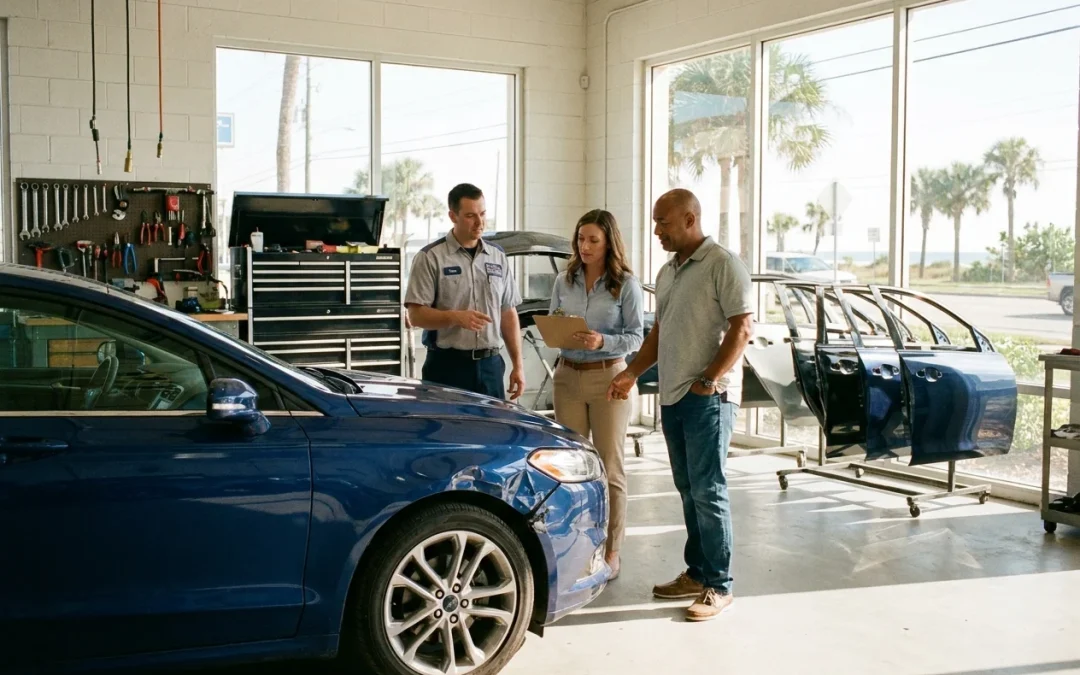
After a car accident, the collision repair process can feel unfamiliar, especially when an insurance claim is involved. Between estimating damage, choosing a repair facility, reviewing coverage, and waiting for approvals, it is easy to feel unsure about who makes which decisions and what to expect next.
One of the most important people involved in an automobile insurance claim is the insurance adjuster. Understanding what the adjuster does, what they do not do, and how their decisions affect your repair can help you communicate more clearly, protect your interests, and move through the claim process with greater confidence.
How an Adjuster Fits Into the Claim Process
An insurance adjuster is the person assigned by the insurance company to evaluate the loss after a collision. Their primary job is to investigate the claim, assess the vehicle damage, review policy coverage, and determine what the insurer may pay under the terms of the policy. In many cases, the adjuster becomes the main point of contact between the policyholder, the repair shop, and the insurance company.
The adjuster’s involvement often begins shortly after the claim is reported. They may ask for details about the accident, request photos, review police reports if available, and confirm basic information such as the vehicle identification number, mileage, and location of the damaged vehicle. This early review helps the insurer understand what happened and whether the claim falls within the policy’s coverage.
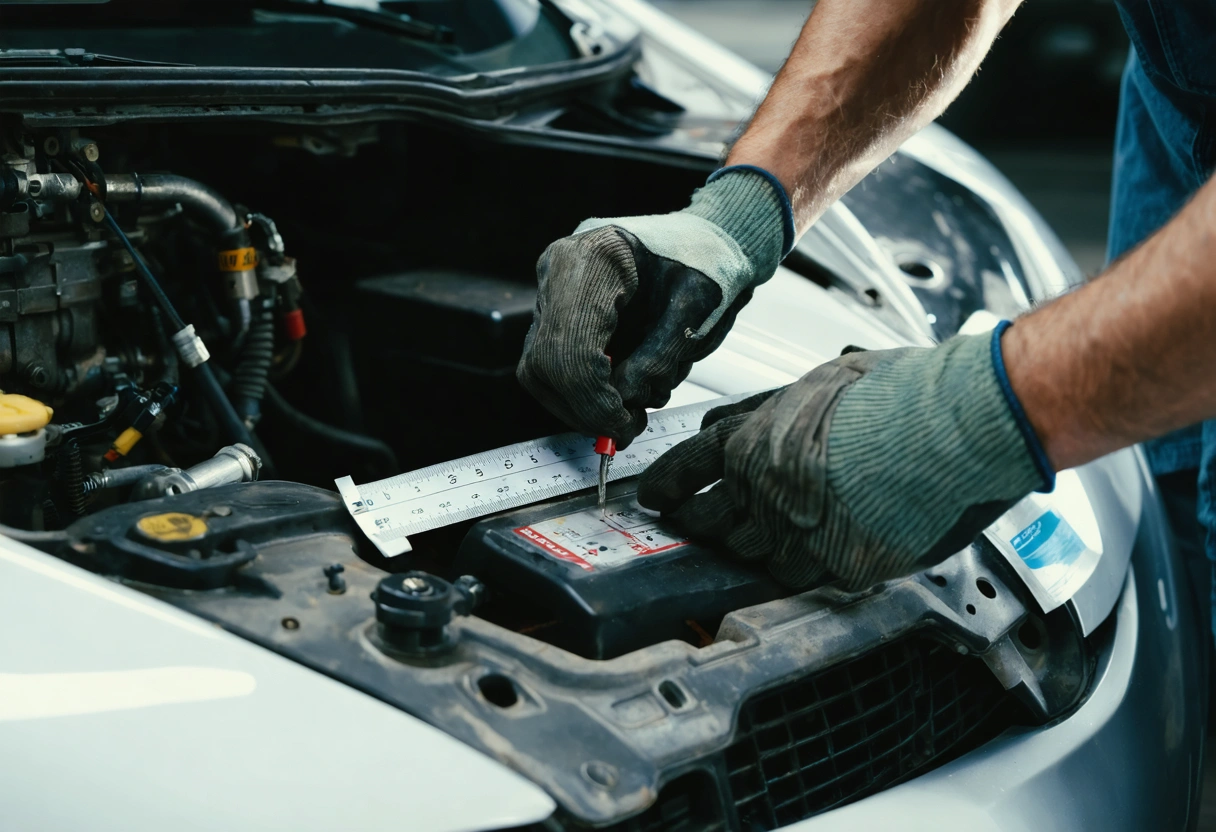
In collision repair claims, the adjuster may inspect the vehicle in person, review digital images, or work from documentation submitted by a repair facility. The inspection is used to create an initial damage estimate. This estimate is not always the final repair cost. It is often the starting point for the claim and may change once the repair shop begins disassembly and finds hidden damage behind exterior panels, bumpers, or structural components.
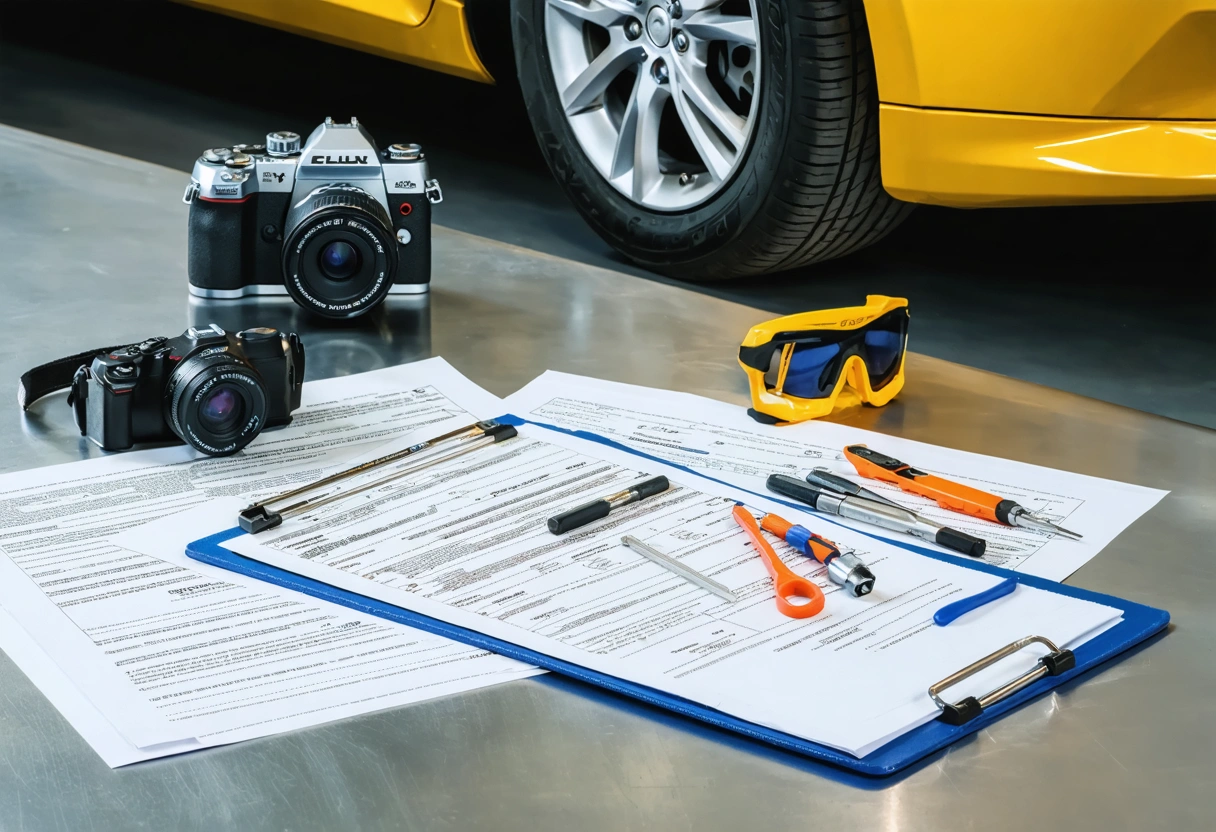
It is important to remember that the adjuster represents the insurance company, not the repair shop and not the vehicle owner in an independent advisory role. That does not mean the adjuster is automatically working against you. It simply means their decisions are guided by the insurance policy, company procedures, state regulations, and the documented damage related to the loss.
Common Responsibilities of an Insurance Adjuster
Although every claim is different, adjusters commonly handle several key tasks during the collision repair process. These responsibilities may include confirming coverage, determining whether the damage is related to the reported accident, preparing or approving an estimate, reviewing repair shop supplements, and explaining payment procedures.
Adjusters may also help determine whether a vehicle is repairable or should be declared a total loss. If repair costs approach or exceed the vehicle’s actual cash value, depending on state law and insurer guidelines, the adjuster may shift the claim from a repair claim to a total loss evaluation. This can affect timelines, settlement options, rental coverage, and decisions about whether the vehicle will be retained, repaired, or replaced.
What the Initial Estimate Really Means
The initial estimate is one of the most commonly misunderstood parts of an automobile insurance claim. Many drivers assume the first estimate is the final amount the insurance company will pay for repairs. In reality, the first estimate is often based only on visible damage and available information at the time of inspection. Modern vehicles contain sensors, brackets, reinforcement bars, wiring, and structural parts that may not be fully visible until the vehicle is taken apart.
For this reason, it is common for the repair shop to submit a supplement after repairs begin. A supplement is a request for additional payment when the shop discovers damage or required procedures that were not included in the original estimate. The adjuster then reviews the supplement, compares it with photos and repair documentation, and decides whether the added items are covered as part of the claim.
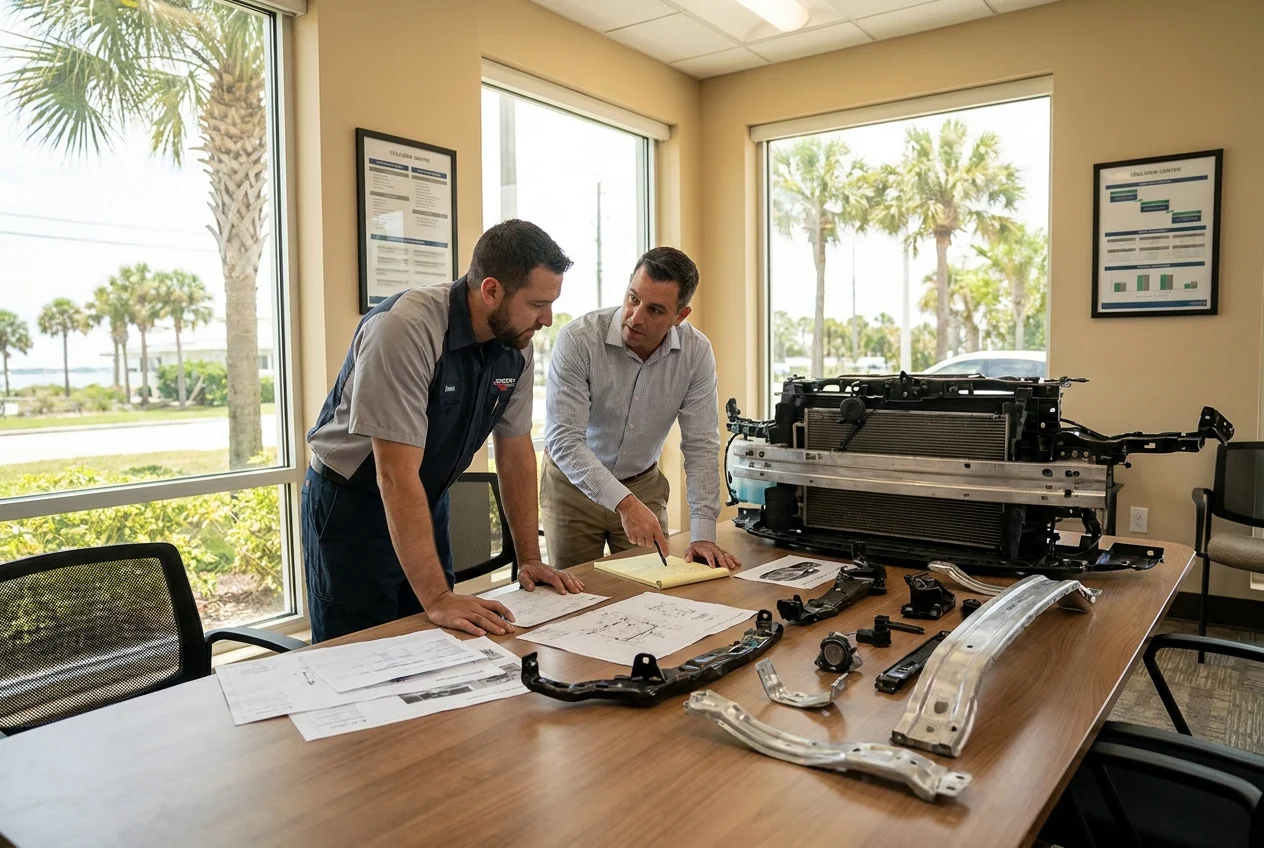
This process can be frustrating if you expected repairs to begin and end according to the first estimate. However, supplements are a normal part of collision repair, especially after moderate or severe accidents. A thorough supplement review helps ensure that necessary repairs are documented and that the final repair plan reflects the actual condition of the vehicle.
The estimate may also include decisions about parts. Depending on the policy, state requirements, vehicle age, and insurer guidelines, the estimate may list original equipment manufacturer parts, aftermarket parts, recycled parts, or reconditioned parts. If you have questions about the type of parts being used, it is wise to ask both the adjuster and the repair facility for a clear explanation before authorizing repairs.
Why Repair Costs Can Change After Disassembly
Collision damage often travels beyond the area that is immediately visible. For example, a bumper cover may look like the main damaged part, but hidden beneath it could be absorber damage, impact bar damage, sensor damage, mounting tab damage, or alignment issues. Until the outer parts are removed, the full scope of damage may not be known.
Disassembly gives the repair technician a more accurate view of what must be repaired or replaced. Once that additional damage is documented, the shop can send photos, measurements, repair procedures, and updated pricing to the adjuster. The adjuster’s review of that information helps determine whether the added work is related to the collision and payable under the claim.
Communication Between the Adjuster and the Repair Facility
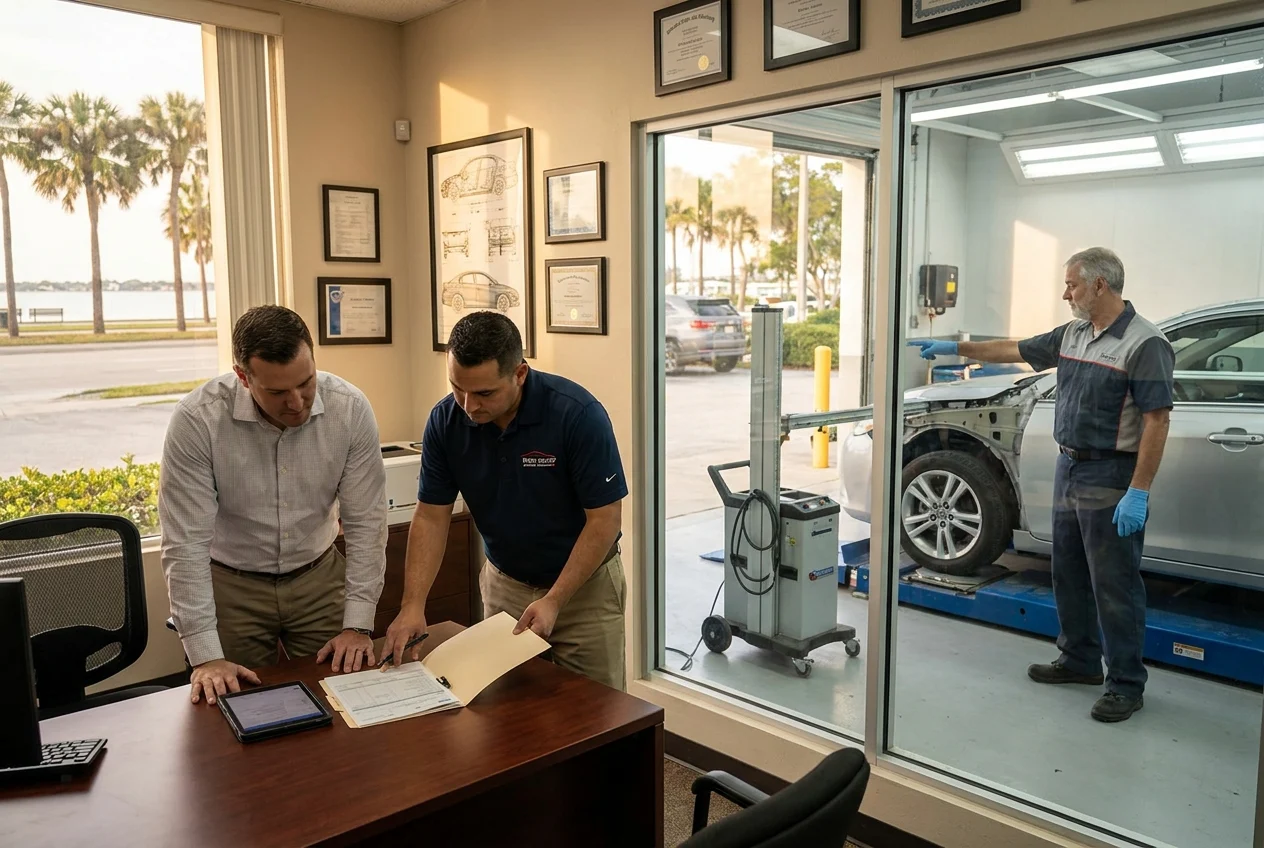
Once your vehicle is at a collision repair facility, much of the technical conversation may happen between the shop and the adjuster. This can include discussions about labor times, repair procedures, parts availability, diagnostic scans, calibrations, refinishing requirements, and whether a damaged part can be repaired safely or must be replaced. A quality repair facility will usually document its position with photos, manufacturer repair information, measurements, and written explanations.
This communication matters because the adjuster may not approve every requested line item automatically. If the shop believes a certain operation is required, such as removing adjacent panels for proper paint blending or performing a post-repair scan, the adjuster may ask for supporting documentation. The strongest repair discussions are based on evidence, not assumptions. When the repair facility and adjuster communicate clearly, disputes are often resolved more efficiently.
As the vehicle owner, you do not need to understand every labor code or estimating term, but you should stay informed. Ask the shop whether the insurer has approved the full repair plan, whether any items are still pending, and whether delays are related to parts, supplement review, or scheduling. Clear updates can help you separate normal claim processing from avoidable communication gaps.
When There Is a Disagreement About Repairs
Disagreements sometimes arise between the adjuster and the repair facility. The adjuster may believe a part is repairable, while the technician may believe replacement is necessary. The insurer may question a calibration charge, while the shop may point to manufacturer requirements. These differences do not always mean someone is acting unfairly. They often reflect competing interpretations of repair standards, estimating systems, and policy obligations.
If a disagreement affects your repair, ask for the issue to be explained in plain language. You can request a copy of the insurer’s estimate and the shop’s estimate, then compare the disputed items. If safety-related repairs are involved, documentation from the vehicle manufacturer can be especially important. In some cases, the adjuster may reinspect the vehicle, request additional photos, or involve a supervisor to review the disputed item.
Your Rights and Responsibilities as the Vehicle Owner
Even though the insurance adjuster plays a major role, you remain the vehicle owner and have important rights and responsibilities. In many locations, you may choose the repair facility that works on your vehicle, even if the insurer recommends a preferred or direct repair shop. Insurance companies may suggest shops within their network because those shops have established billing and communication procedures, but the final choice may still belong to you depending on applicable law.
You are also responsible for understanding your policy. The adjuster can explain coverage, but the policy controls what is payable. Your deductible, rental reimbursement limits, betterment provisions, custom equipment coverage, and exclusions can all affect the final outcome.
Another important responsibility is authorizing repairs. The insurance company may approve payment, but the repair contract is usually between you and the shop. Before signing authorization, ask how supplements are handled, whether storage fees could apply, how parts delays are managed, and when payment is expected.
You should also keep records. Save claim numbers, estimate copies, supplement approvals, rental invoices, emails, text updates, and repair invoices. If questions arise later about what was approved, paid, or repaired, written documentation is far more reliable than memory.
How Adjusters Evaluate Total Loss Decisions
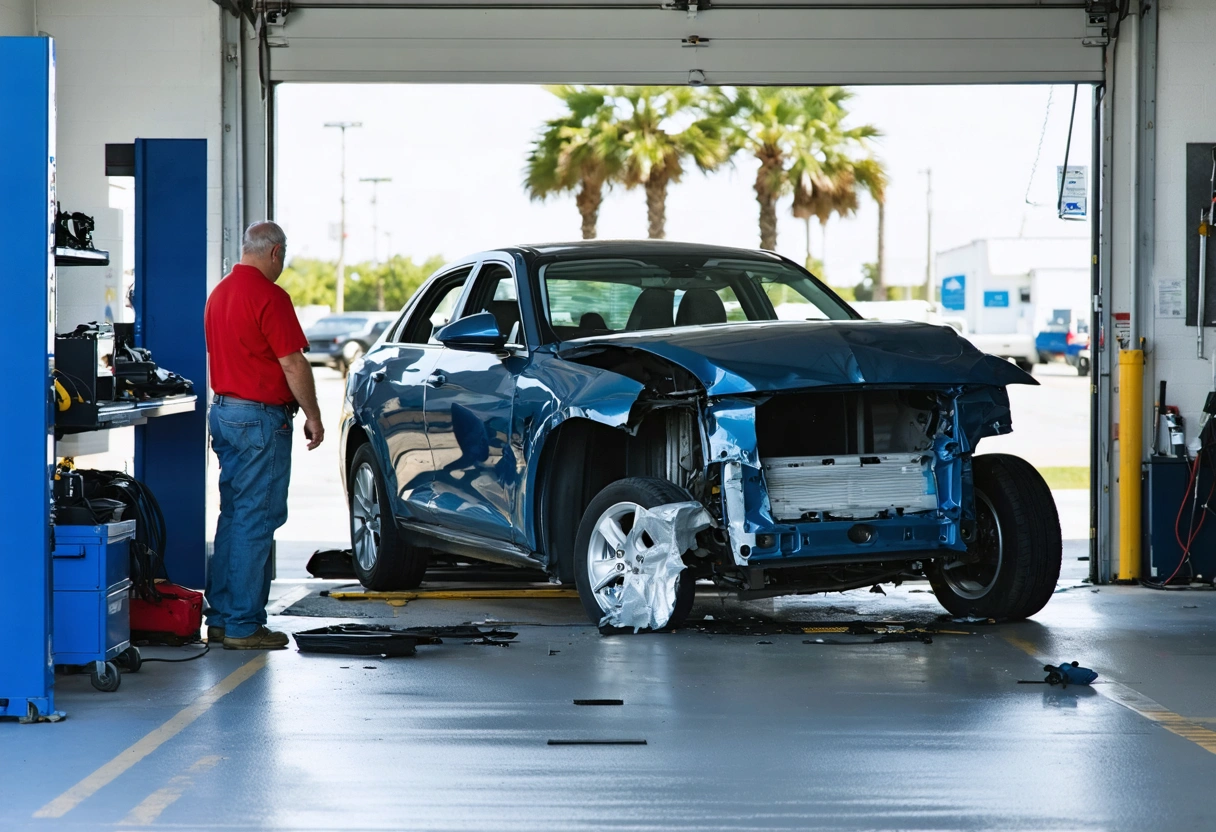
Not every collision repair claim ends with repairs. Sometimes the adjuster determines that the vehicle is a total loss. This generally happens when the cost to repair the vehicle, plus related expenses such as rental, towing, storage, and salvage value considerations, makes repair economically unreasonable under the insurer’s guidelines or state rules.
When evaluating a total loss, the adjuster typically considers the vehicle’s actual cash value immediately before the accident. This value may be based on comparable vehicles, mileage, condition, trim level, options, prior damage, and local market data.
For example, if your vehicle had a higher trim package, recent tires, lower than average mileage, or factory options that were not included in the valuation report, those details may affect the settlement.
Total loss claims can move quickly, so pay attention to deadlines involving rental coverage, title paperwork, and vehicle release forms. If your vehicle is at a storage yard, daily storage charges may accumulate.
Working With the Adjuster More Confidently
The insurance adjuster’s role in your collision repair process is central, but it is only one part of a larger system involving your policy, the repair facility, parts suppliers, vehicle technology, and state insurance rules.
The most effective approach is to stay engaged without feeling that you must become an estimating expert. Ask for explanations in plain language, review your estimates, keep documentation, and communicate with both the adjuster and repair facility.
Collision repair is more complex than many drivers realize. Modern vehicles depend on advanced materials, electronics, sensors, safety systems, and precise repair procedures. Because of that complexity, the adjuster’s estimate may evolve, supplements may be necessary, and communication may take time.
Need help with Understanding the Insurance Adjuster’s Role in Your Collision Repair Process?