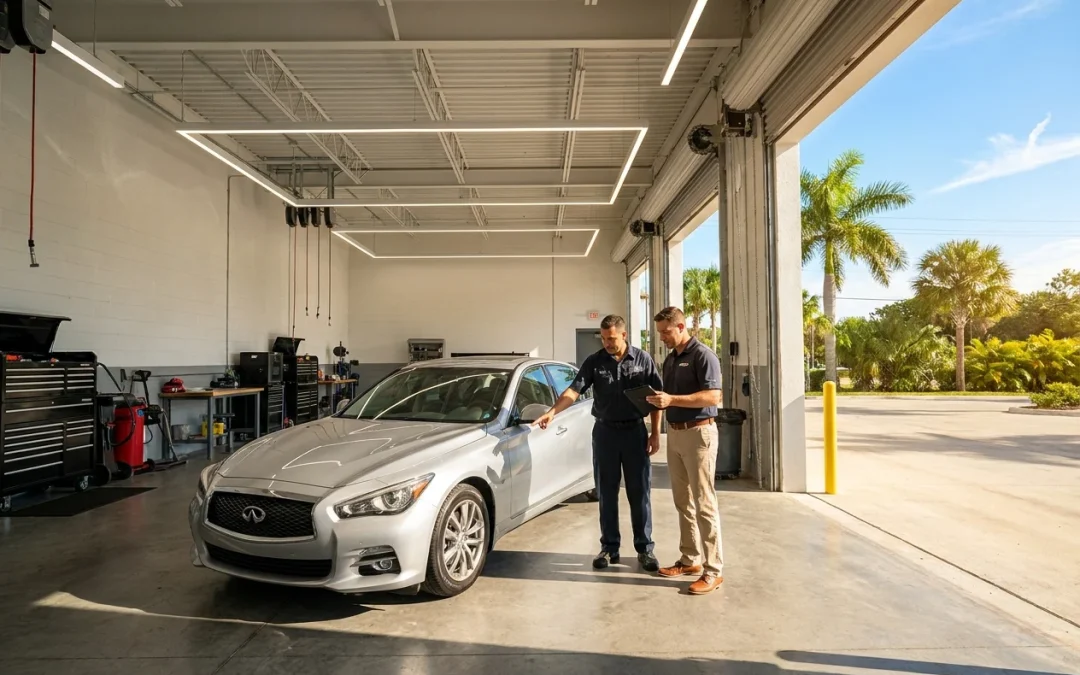
Florida is one of the toughest environments in the country for automotive paint. Between intense sunlight, high humidity, salty coastal air, heavy rain, airborne contaminants, and year-round heat, a vehicle’s finish is under constant stress even when it is parked.
Paint fading, peeling, and clear coat failure usually do not happen overnight. They develop when the protective layers on a vehicle’s exterior are gradually weakened, allowing UV radiation, moisture, oxidation, and chemical contaminants to damage the finish from the outside in.
Florida’s Climate Creates Constant Stress on Automotive Paint
Automotive paint is designed as a layered system. Most modern vehicles have a primer layer, a color basecoat, and a clear coat that provides gloss, depth, and protection.
The combination of strong sun, heat, humidity, and salt exposure accelerates the breakdown of paint protection. A car that might retain its shine for many years in a milder climate can show signs of dullness, oxidation, or peeling much sooner when it spends most of its life outdoors in Florida.
Intense UV Radiation Breaks Down the Clear Coat
Ultraviolet radiation is one of the leading causes of paint fading and clear coat deterioration. Florida receives high levels of UV exposure throughout the year, and that exposure breaks down the chemical bonds in the clear coat over time.
As the clear coat weakens, it may begin to lose gloss and develop a cloudy, chalky, or hazy appearance. Once the clear coat no longer blocks UV rays effectively, the color coat beneath it can begin to fade, especially on horizontal surfaces like the hood, roof, and trunk.
Heat Speeds Up Oxidation and Surface Degradation
High temperatures make paint damage progress faster. When a vehicle sits in direct sunlight, the painted panels can become much hotter than the surrounding air, which causes the paint system to expand, contract, and age more rapidly.
This constant heat cycling can contribute to microscopic cracking in the clear coat. Over time, oxygen and moisture can enter these weakened areas, leading to oxidation, dullness, and eventual clear coat failure if the surface is not properly maintained.
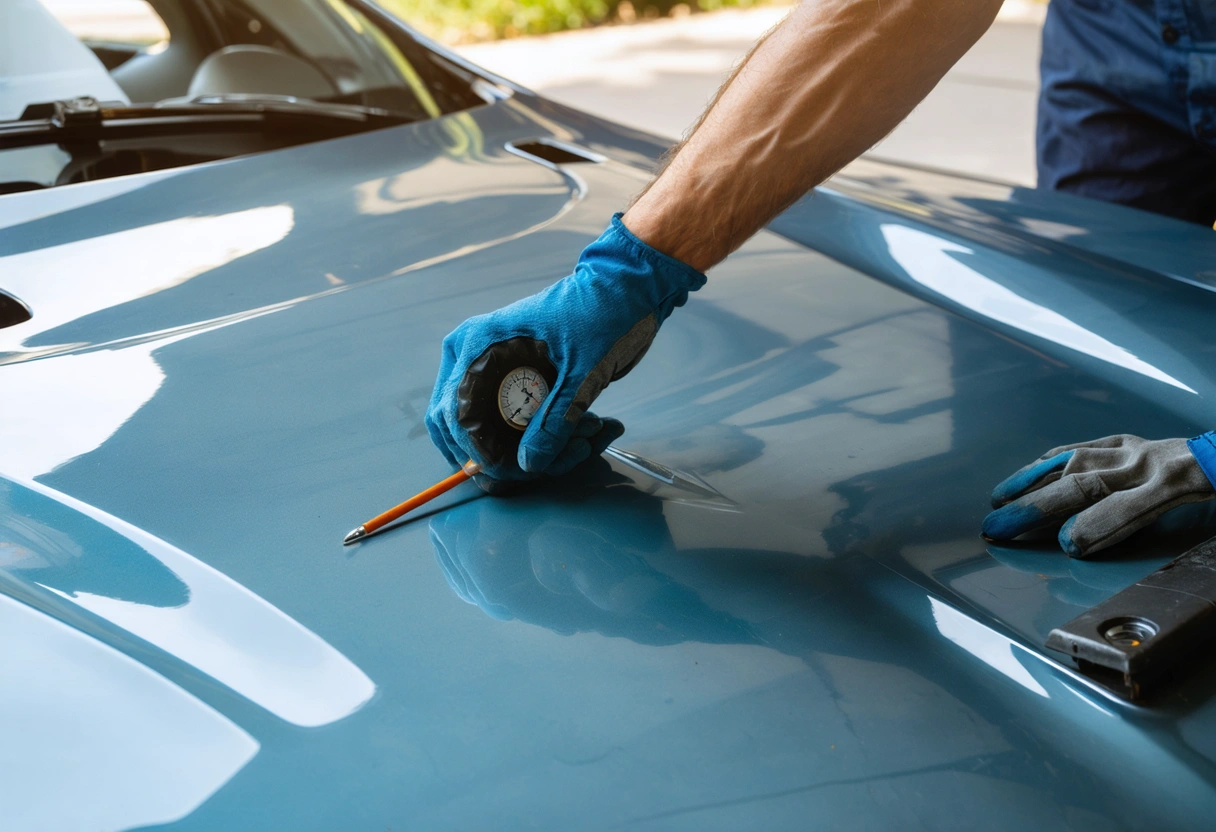
Moisture, Salt, and Contaminants Make Paint Problems Worse
Florida’s humidity and coastal environment create another layer of risk for vehicle finishes. Moisture can remain on the surface for long periods, especially overnight or after frequent afternoon storms.
Even vehicles that are not parked directly on the beach can be exposed to salt carried through the air. This is especially common in coastal communities, where salt particles settle on body panels, trim, wheels, and glass.
Salt Air Can Attack Weak or Damaged Paint
Salt does not usually destroy a healthy clear coat immediately, but it can worsen existing weaknesses. Small chips, scratches, and worn areas give salt and moisture a place to collect, which can lead to corrosion beneath the paint surface.
Once corrosion begins under the coating, paint adhesion can weaken. This can result in bubbling, lifting, or peeling, especially around panel edges, stone chips, door seams, and areas where previous paint repairs were not properly sealed.
Rain, Road Film, and Airborne Pollution Leave Residue Behind
Florida rain may seem like it should rinse a vehicle clean, but it often leaves behind minerals, pollutants, and organic residue. When water evaporates on a hot panel, those deposits can bake into the surface and become more difficult to remove.
Road film, tree sap, bird droppings, bug splatter, and industrial fallout can also damage the clear coat if they remain on the vehicle too long.
Why Clear Coat Failure Is So Common on Florida Vehicles
Clear coat failure occurs when the transparent protective layer on top of the color coat breaks down to the point that it can no longer protect the paint underneath.
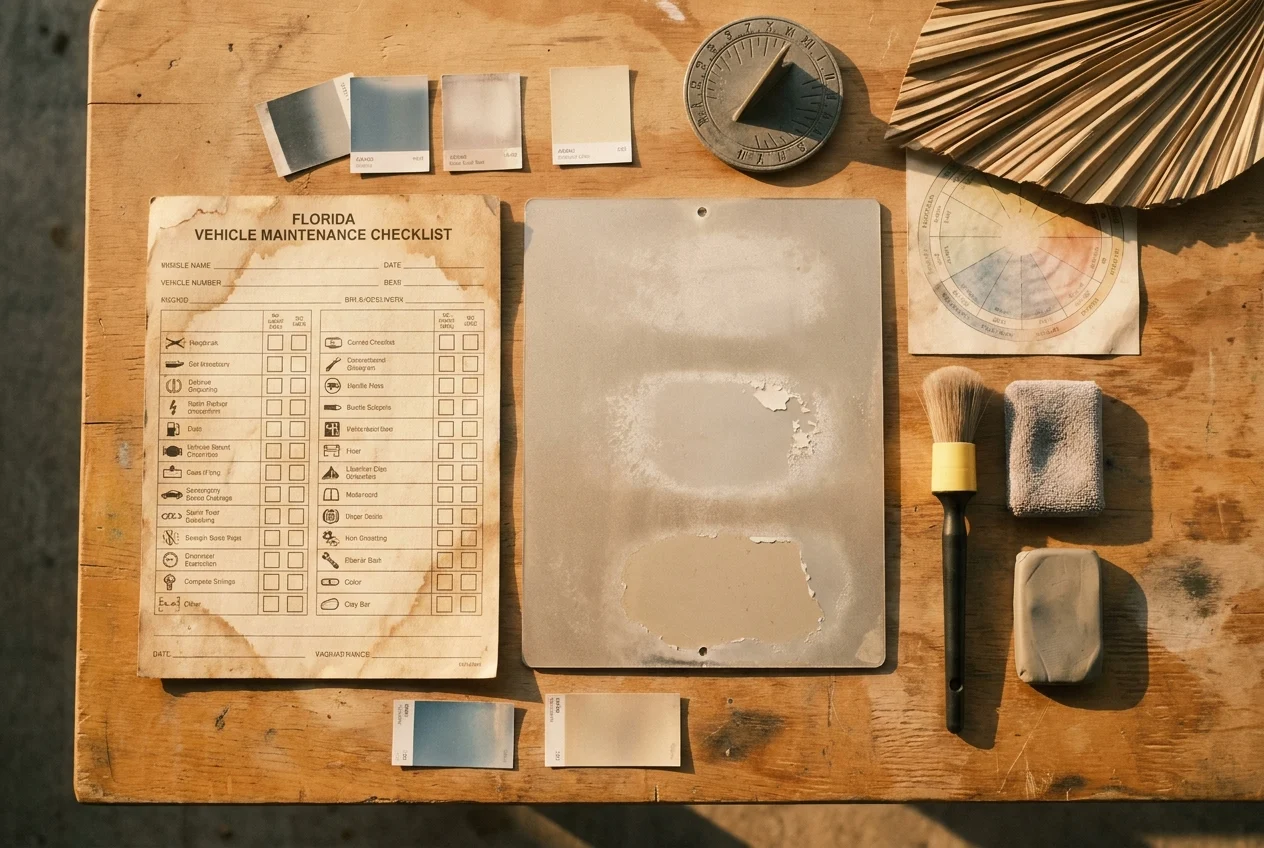
These top-facing panels receive the most direct sunlight and hold the most heat, which is why they commonly fail before vertical panels like doors and quarter panels.
Early Clear Coat Damage Can Look Like Dull or Patchy Paint
In the early stages, clear coat deterioration may simply look like the vehicle needs a good wash or polish. The paint may appear flat, chalky, or uneven, especially when viewed in direct sunlight.
At this point, some oxidation or surface contamination may still be correctable with professional cleaning, decontamination, polishing, or refinishing preparation. However, if the clear coat has become too thin or has started separating from the basecoat, polishing cannot restore long-term protection.
Advanced Clear Coat Failure Causes Peeling and Flaking
When clear coat failure becomes advanced, the coating may begin to peel in sheets or flakes. This often starts as small white or cloudy spots that expand outward.
Once peeling begins, the clear coat has physically separated from the paint layer beneath it. At that stage, waxes, sealants, or buffing products cannot reattach it.
Paint Fading Happens When Pigments and Protection Break Down
Paint fading is the visible loss of color intensity and depth. Red, blue, black, and darker colors often show fading more noticeably because they absorb more sunlight and heat.
On many Florida vehicles, fading is most obvious when comparing sun-exposed panels to protected areas. For example, the roof may look dull while the lower doors still look glossy, or the top of the trunk may appear lighter than the rear bumper.
Single Stage Paint Can Fade Differently Than Basecoat Clear Coat Finishes
Older vehicles and some commercial vehicles may have single stage paint, where the color and gloss are part of the same coating layer. When single stage paint oxidizes, the surface can become chalky and may transfer color onto a polishing pad or cloth.
Modern basecoat clear coat finishes usually fail differently. The color layer is under the clear coat, so the first visible signs are often haze, dullness, or peeling in the clear layer.
Uneven Fading Can Make Panel Repairs More Noticeable
Florida sun can also make previous paint repairs easier to spot over time. If one panel was repainted with a slightly different formula, lower quality materials, or improper blending, UV exposure may cause that panel to fade at a different rate than the rest of the vehicle.
This is why color matching and blending are important in automotive refinishing. A freshly painted panel may look acceptable at first, but if the materials and application are not suitable for the vehicle and climate, the repair may become more obvious after months of sun, heat, and washing.
Peeling Paint Is Often a Sign of Adhesion Failure
Paint peeling happens when one layer of the paint system loses its bond with the layer beneath it. This can involve the clear coat peeling from the basecoat, the basecoat separating from primer, or primer losing adhesion to the underlying metal, plastic, or previous coating.
Peeling is different from normal fading because it is a physical separation of the coating. Once adhesion is compromised, the affected area can spread as wind, washing, pressure, rain, and heat continue to lift the loose edges.
Rock Chips and Scratches Can Turn Into Larger Peeling Areas
Small chips and scratches are common on Florida roads, especially on front bumpers, hoods, mirrors, and rocker panels. A minor stone chip may seem cosmetic at first, but it can expose the layers beneath the clear coat and create an entry point for moisture, salt, and contaminants.
If the exposed area is not repaired or protected, the surrounding coating may begin to lift. This is especially true when the vehicle is repeatedly exposed to high pressure washing, heavy rain, road spray, and heat cycling.
Poor Surface Preparation Can Cause Premature Peeling
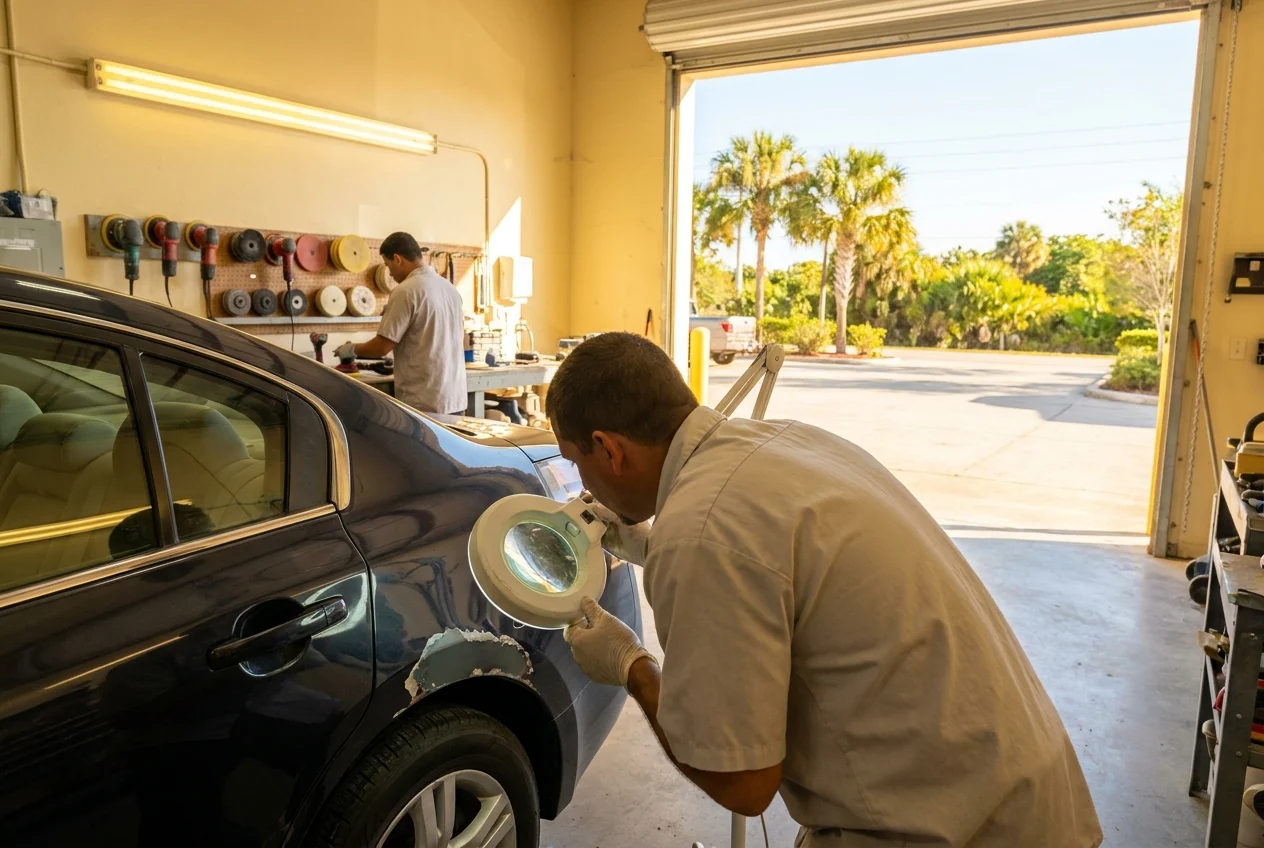
Some peeling problems are linked to previous refinishing work. Automotive paint needs a clean, properly sanded, and properly prepared surface in order to bond correctly.
Improper primer use, incorrect flash times, incompatible materials, or poor curing conditions can also contribute to peeling. Florida humidity can make this more challenging because moisture in the air can affect drying, adhesion, and finish quality if the repair environment is not controlled correctly.
Improper Washing and Maintenance Can Accelerate Paint Damage
Florida’s climate is already hard on paint, but improper washing habits can make fading and clear coat failure happen faster. Abrasive cleaning methods, harsh chemicals, dirty towels, and neglected contamination can all weaken the surface over time.
Many paint problems develop gradually from repeated small damage. A single rough wash may not ruin a finish, but years of washing with the wrong products or allowing contaminants to bake onto the surface can reduce gloss, thin the clear coat, and leave the paint more vulnerable to UV and moisture.
Harsh Detergents Can Strip Protection From the Surface
Household cleaners, dish soap, degreasers, and strong chemicals can remove waxes, sealants, and protective coatings from automotive paint. Some products can also dry out trim, stain surfaces, or leave residue that affects the finish.
When protection is stripped away repeatedly, the clear coat is left exposed to Florida sun and contaminants with less defense. Automotive specific wash products are designed to clean without unnecessarily damaging or drying the finish when used correctly.
Automatic Car Washes Can Leave Micro Scratches
Some automatic car washes use brushes or cloth strips that may hold grit from previous vehicles. Over time, these can create fine scratches and swirl marks in the clear coat.
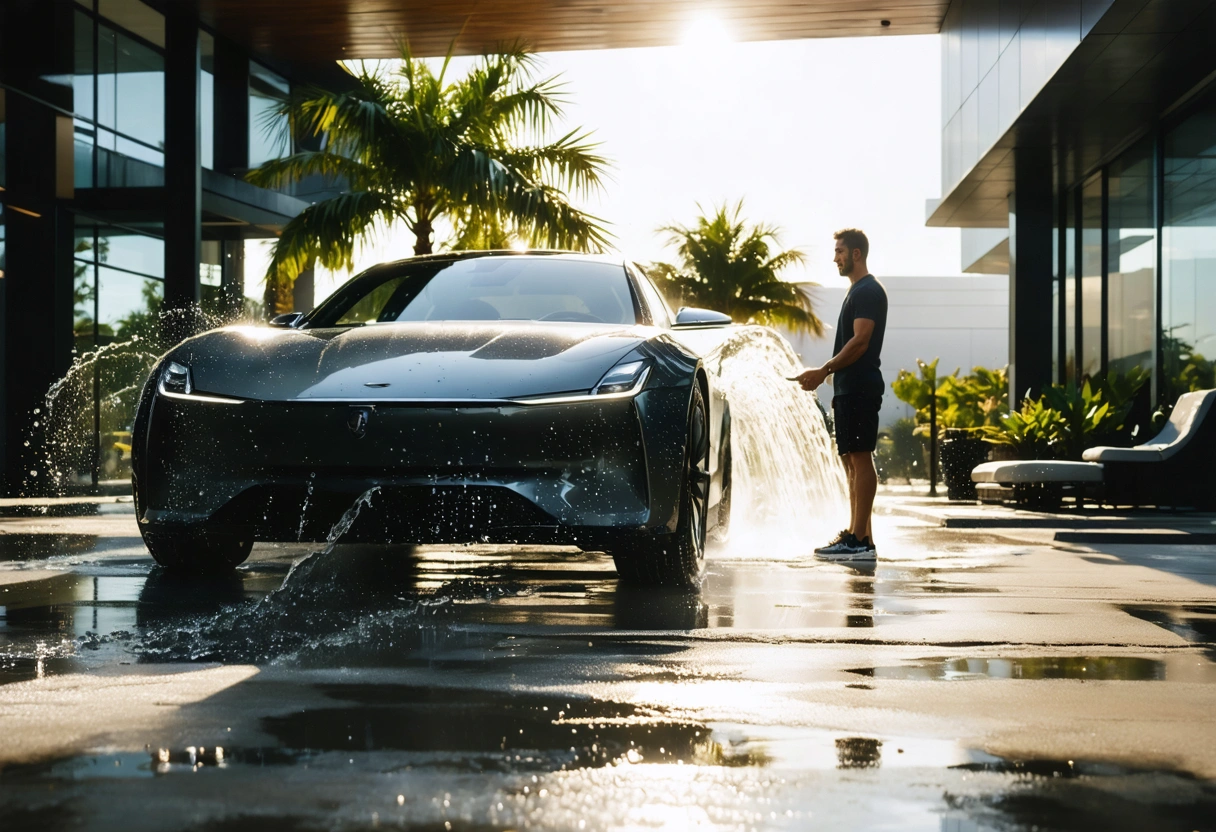
Touchless washes may reduce physical contact, but they often rely on stronger chemicals to remove grime. If the vehicle is not protected afterward, frequent chemical exposure can still contribute to surface degradation.
Parking Conditions Play a Major Role in Paint Longevity
Where a vehicle spends most of its time can strongly affect how quickly the paint fades or fails. A car parked outside all day in direct sun will usually age faster than a similar car kept in a garage, carport, or shaded area.
Florida vehicles often experience year-round outdoor exposure, which means there is little seasonal relief for thepaint system. Constant exposure means UV damage, heat cycling, moisture, and contamination continue month after month.
Garage Parking and Covered Parking Reduce UV Exposure
Parking in a garage, under a carport, or beneath a quality vehicle cover can significantly reduce direct UV exposure. This helps preserve gloss, slow oxidation, and protect plastic trim, headlights, rubber seals, and painted panels from unnecessary aging.
Shade is helpful, but it should be used carefully. Parking under trees may reduce sunlight, but it can also expose the vehicle to sap, pollen, bird droppings, leaves, and moisture retention.
Vehicles Parked Near the Coast Need More Frequent Cleaning
Cars, trucks, and SUVs parked near the ocean or Intracoastal areas often need more frequent washing because salt particles can accumulate quickly. Even when salt is not visible, it can settle on horizontal surfaces and in panel gaps.
Regular rinsing and washing help remove salt before it has time to sit on the finish. Extra attention should be given to panel edges, wheel openings, lower doors, bumpers, and areas where road spray and salt residue can collect.
Need help with What Causes Paint Fading, Peeling, and Clear Coat Failure on Florida Vehicles??