Your vehicle’s paint does more than make it look clean, glossy, and well cared for. Automotive paint also helps protect the body panels from moisture, UV exposure, road debris, chemicals, and corrosion. When the finish starts to fail, small cosmetic issues can quickly become larger repair concerns if they are ignored.
Knowing whether your car needs a simple paint touch-up or a full refinish can help you protect its value, prevent rust, and avoid unnecessary repair costs. Some blemishes are minor and localized, while others indicate deeper damage in the clear coat, base coat, primer, or even the metal beneath the paint.
Understanding What Your Car Paint Is Telling You
Modern automotive paint systems are usually made up of multiple layers, including primer, color coat, and clear coat. Each layer has a specific purpose. The primer helps the paint bond to the surface, the color coat gives the vehicle its appearance, and the clear coat provides gloss and protection. When one of these layers begins to break down, the symptoms can appear as dullness, scratches, peeling, fading, bubbling, or exposed metal.
A minor flaw on the surface does not always mean your car needs a complete paint job. Small stone chips, light scratches, and isolated scuffs may be handled with a professional touch-up or spot repair. However, widespread oxidation, clear coat failure, mismatched panels, or paint damage across several areas may point to the need for a more comprehensive refinish.
The key is to look at the size, depth, location, and spread of the damage. A single chip on the hood is very different from fading across the roof, hood, and trunk. Similarly, a scratch that only affects the clear coat is usually less serious than one that cuts through to primer or bare metal. By learning to identify these differences, car owners can make better decisions about paint repair before the damage becomes more expensive.
Touch-Up vs. Full Refinish: Why the Difference Matters
A paint touch-up is typically used for small, localized imperfections. This may include rock chips, door edge nicks, tiny scratches, or small scuffed areas. The goal is to cover exposed surfaces, improve appearance, and prevent moisture from reaching the underlying material. A quality touch-up can be especially useful when the surrounding paint is still in good condition.

A full refinish, on the other hand, involves repainting a larger area, such as an entire panel, several panels, or the whole vehicle. This may be necessary when the paint damage is extensive, the color has faded unevenly, or the clear coat has failed across a wide surface. Refinishing is also common after collision repair, major bodywork, or restoration projects where a consistent finish is needed.
Visible Surface Damage That Should Not Be Ignored
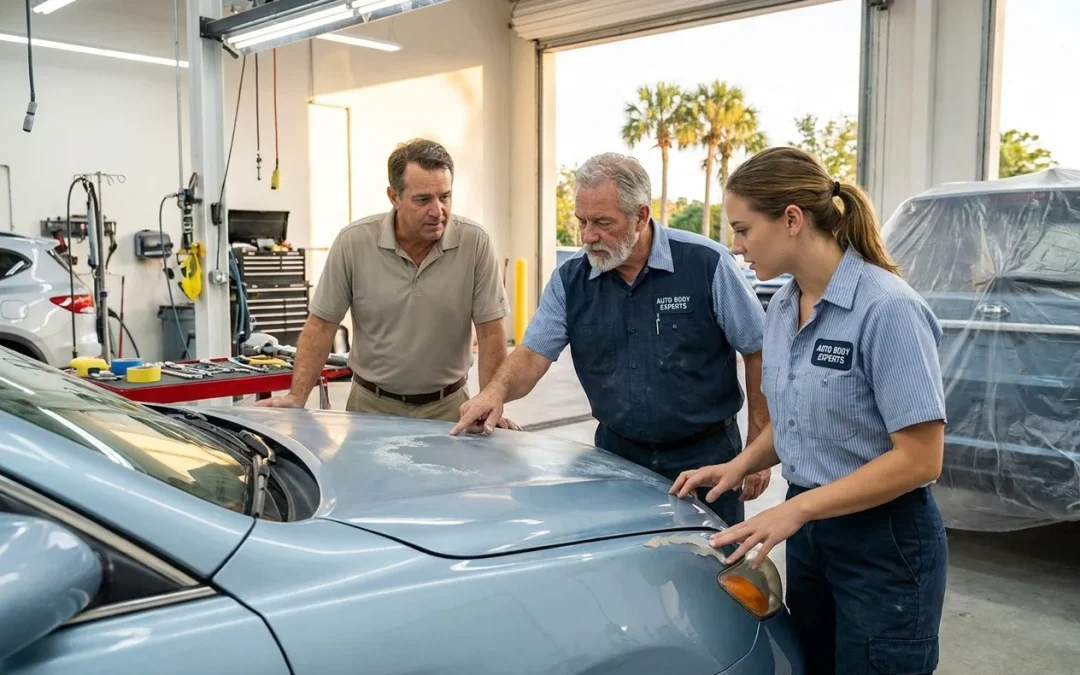
One of the most obvious signs your car may need paint attention is visible damage on the surface. This can include chips, scratches, scuffs, stains, or areas where the paint appears thin or worn. While some surface flaws may seem purely cosmetic, they can weaken the protective barrier that keeps moisture, salt, dirt, and contaminants away from the body panel.
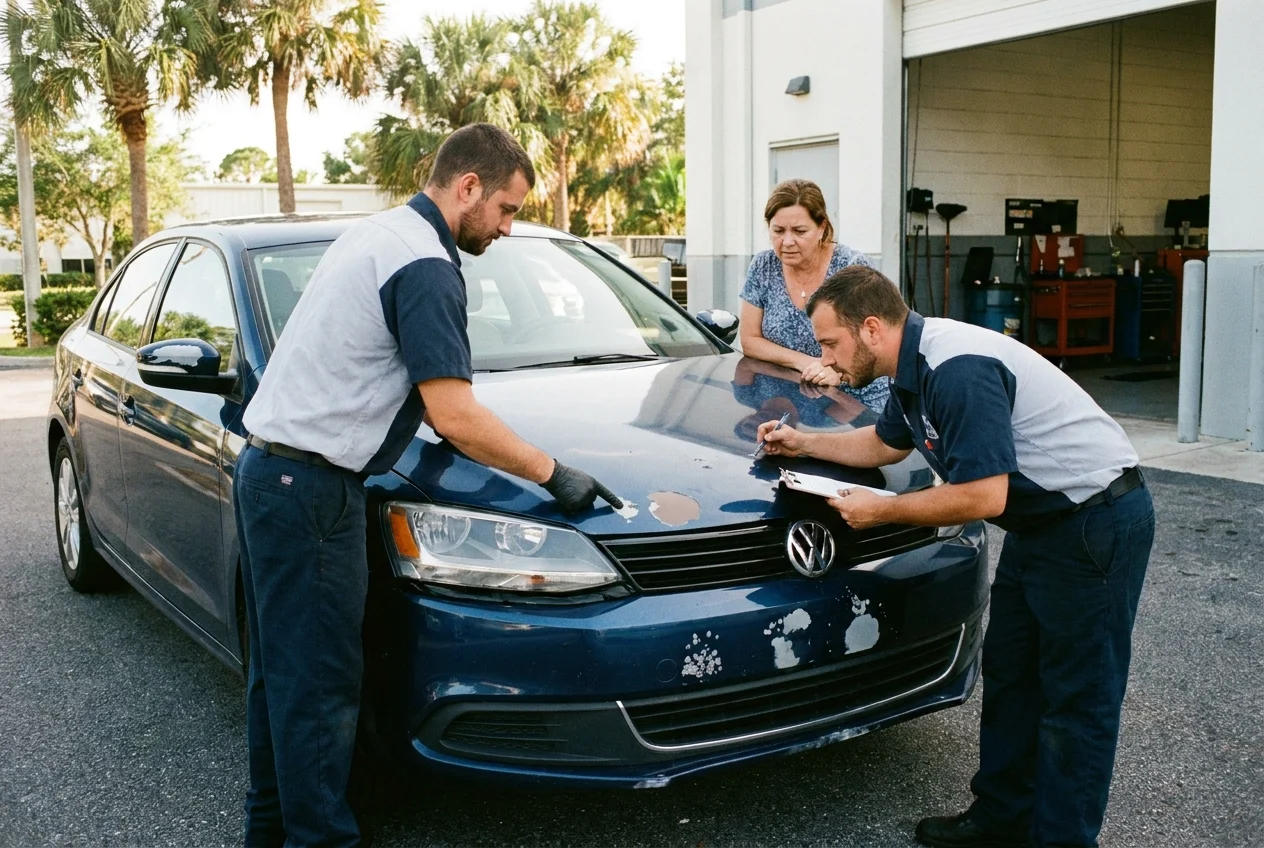
Paint chips are especially common on front bumpers, hoods, fenders, rocker panels, and side mirrors because these areas are frequently hit by gravel, sand, and road debris. If a chip is shallow and small, a touch-up may be enough to seal the area and restore a more uniform look. If there are many chips clustered together, or if the chips expose primer or metal, a larger repair may be needed to create a durable and even finish.
Scratches That Go Beyond the Clear Coat
Not all scratches are the same. A light scratch that only affects the clear coat may appear as a thin white line or swirl mark, especially under direct sunlight. These marks may often be improved with polishing or minor paint correction. However, if you can feel the scratch with your fingernail, there is a stronger chance that it has cut deeper into the paint layers.
Deep scratches require more attention because they can expose the color coat, primer, or bare metal. Once the protective layers are broken, the damaged area becomes vulnerable to rust and continued paint lifting. A localized touch-up may be suitable for a small deep scratch, but long scratches across doors, quarter panels, or multiple panels may require refinishing to achieve a smooth and consistent appearance.
Scuffs, Transfer Marks, and Bumper Damage
Scuffs and paint transfer marks often happen in parking lots, tight garages, or minor contact with another object. In some cases, the visible mark may be material from another surface sitting on top of the clear coat. If the underlying paint is intact, the issue may be corrected with cleaning, polishing, or light refinishing work.
When a scuff removes paint, cracks the finish, or exposes the plastic bumper cover beneath, the repair becomes more involved. Bumper paint damage can also spread if the flexible surface continues to flex and the coating loses adhesion. Small bumper scuffs may be touched up, but larger scraped areas often look best when the bumper is properly prepped and refinished.
Fading, Oxidation, and Loss of Gloss
Fading is one of the most common signs that a vehicle may need more than a small paint touch-up. It usually appears first on horizontal surfaces such as the roof, hood, and trunk because these areas receive the most direct sunlight. Over time, UV rays break down the paint and clear coat, causing the finish to lose depth, shine, and color intensity. Red, black, blue, and darker colors often show fading more dramatically, but any color can be affected.
Oxidation is closely related to fading, but it often creates a chalky, cloudy, or powdery appearance. If you run your hand over the panel and the surface feels dry, rough, or lifeless, the clear coat may be deteriorating. Early oxidation may sometimes be improved with polishing and paint correction, but once the clear coat is too thin or has failed completely, polishing alone will not restore lasting protection.
A localized dull spot may be repairable if the surrounding finish is healthy. However, if the vehicle has widespread dullness across multiple panels, a full refinish or partial refinish may be the better long-term solution. This is especially true when the paint no longer reflects light evenly or when the color looks noticeably different from panel to panel.
Why Polishing Is Not Always Enough
Many car owners assume that any dull paint can be buffed back to a showroom shine. While professional polishing can remove fine defects from the clear coat, it cannot replace missing material. If the clear coat has worn away, aggressive polishing may actually make the problem worse by thinning the remaining protection even further.
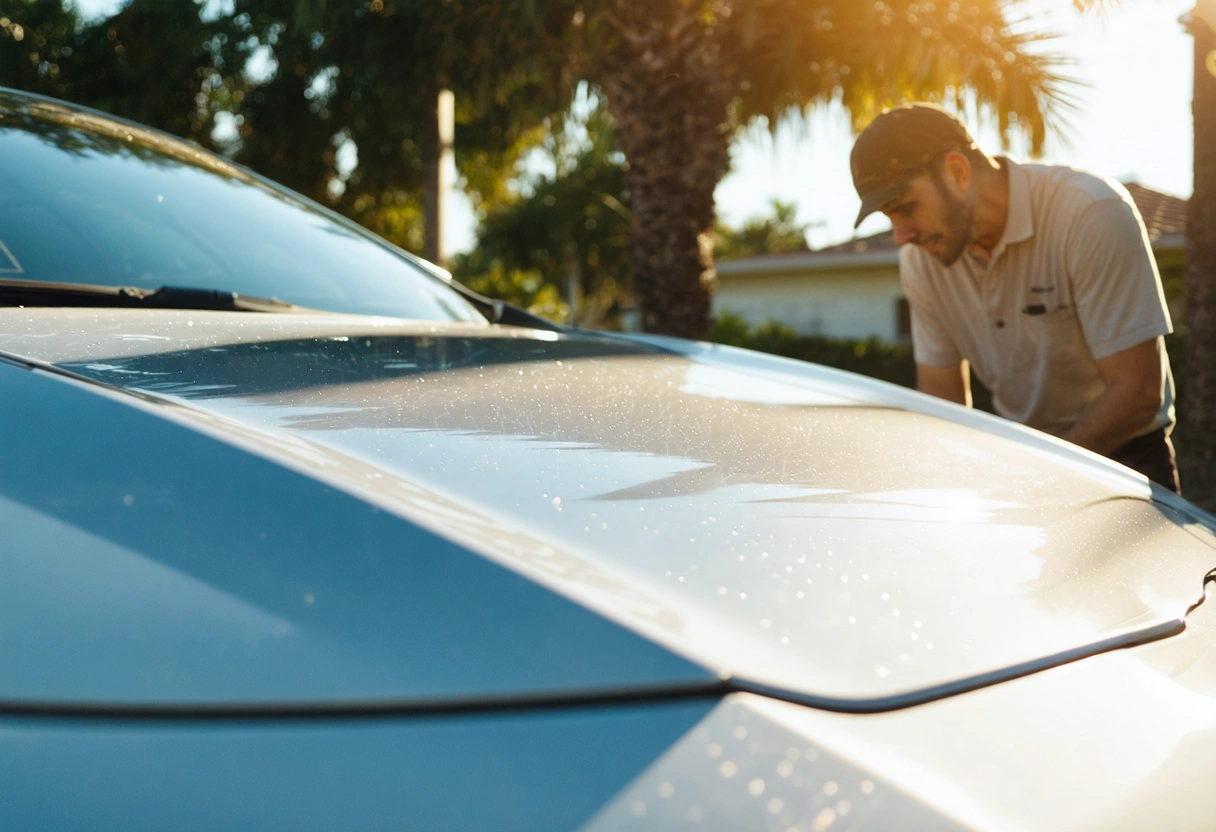
A proper inspection can determine whether the paint still has enough clear coat to safely correct. If the surface has enough material remaining, a correction process may restore gloss. If not, refinishing is usually necessary to rebuild the finish with fresh coating layers that provide appearance and protection.
Peeling, Flaking, or Clear Coat Failure
Peeling paint is a strong warning sign that the coating system has lost adhesion. This can happen when the clear coat separates from the color coat, when previous repairs were not properly prepared, or when age and environmental exposure have weakened the finish.
Clear coat failure is especially noticeable when the surface looks patchy, white, cloudy, or scaly. It may resemble sunburned skin peeling away from the vehicle.
If peeling is limited to one panel, such as a hood or roof, refinishing that panel may be enough. If the same problem appears on several areas of the vehicle, a more extensive refinish may be recommended to create uniform gloss and prevent repeated repairs.
Rust Spots, Bubbling Paint, and Exposed Metal
Rust is one of the clearest signs that paint damage has moved beyond appearance. When paint chips, scratches, or cracks expose metal, moisture and oxygen can begin the corrosion process.
Bubbling paint is especially concerning because it often means corrosion is developing underneath the surface. The paint may still appear mostly intact, but the metal below may be expanding as rust forms.
Small rust spots caught early may be handled with localized repair, depending on depth and location. Rust around wheel arches, lower doors, rocker panels, and windshield edges may require more extensive work because these areas are exposed to water, dirt, salt, and drainage issues.
Mismatched Paint After Previous Repairs
Another sign your car may need refinishing is noticeable color mismatch between panels. This can happen after a previous repair, especially if the paint was not blended correctly or if the original paint has faded over time.
Panel mismatch is often easiest to see in bright daylight or under parking lot lights. A door may look slightly darker than the front fender, or a bumper may appear a different shade from the quarter panel.
A professional refinish may include blending adjacent panels so the color transition looks natural. This is particularly important on newer vehicles, luxury cars, and vehicles with complex paint finishes.

How to Decide Between a Touch-Up and a Refinish
The best repair choice depends on how severe the damage is and what outcome you expect. A touch-up is usually appropriate for very small chips, isolated nicks, and minor scratches where protection is the main goal.
A refinish is usually better when the damage is large, deep, spreading, or visually distracting. Peeling clear coat, heavy oxidation, widespread fading, rust bubbles, poor previous repairs, and long scratches often require panel refinishing.
Cost, vehicle value, age, and intended use also matter. A daily commuter with a few chips may only need strategic touch-ups to prevent rust. A collector vehicle, leased vehicle, or car being prepared for resale may benefit from more precise refinishing.
Protecting Appearance, Value, and Longevity
Your car’s paint finish is a protective system, not just a cosmetic feature. Chips, scratches, fading, peeling, oxidation, rust, and mismatched panels all provide clues about the condition of that system.
Addressing paint problems early is almost always better than waiting. A small chip can become a rust spot, a dull patch can become clear coat failure, and peeling paint can spread across an entire panel.
Need help with Top Signs Your Car Needs a Paint Touch-Up or Full Refinish?