Hurricane season can be hard on vehicles long before the first road closure or flood warning appears. Heavy rain, salt-laden air, flying debris, standing water, and sudden evacuation drives can expose small automotive problems that may not be obvious during normal daily use.
Preparing your car for severe weather is more than filling the fuel tank and checking tire pressure. For drivers in coastal, low-lying, or storm-prone regions, expert repairs and preventive inspections can help reduce the risk of breakdowns, electrical failures, water intrusion, brake problems, and post-storm corrosion.
Why Hurricane Conditions Put Extra Stress on Your Vehicle
Hurricanes create a unique combination of hazards that affect nearly every major vehicle system. Prolonged moisture can seep into vulnerable seals, connectors, cabin areas, and underbody components. Wind-blown debris may damage paint, glass, lights, mirrors, trim, and cooling system components. Even if your car never drives through floodwater, exposure to high humidity and salt air can accelerate corrosion on brake lines, suspension parts, exhaust components, and electrical terminals.
Storm preparation should begin with understanding how these conditions affect your vehicle differently than routine rain. A short drive through deep water can cause immediate engine, transmission, brake, or wheel bearing damage. However, some issues develop gradually after the storm, especially when water reaches electrical connectors, control modules, carpets, or hidden body cavities. This is why specialized automotive repair inspections are valuable both before and after hurricane activity.
Key storm-related risks to inspect before severe weather
Before hurricane season intensifies, a qualified technician should evaluate areas that are most vulnerable to moisture, impact, and emergency driving demands. These checks help confirm that the car is dependable if evacuation becomes necessary and that minor issues are not left to worsen during extreme weather.
- Battery and charging system: Weak batteries often fail during stressful conditions, especially when drivers rely on headlights, wipers, climate control, phone charging, and emergency accessories.
- Tires and alignment: Proper tread depth, inflation, and even wear are essential for traction on wet roads and for maintaining control in heavy rain.
- Brakes: Worn pads, contaminated brake fluid, rusty hardware, or damaged lines can compromise stopping power when roads are slick or visibility is poor.
- Wipers and washer system: Clear visibility depends on strong wiper blades, a working washer pump, and properly aimed washer nozzles.
- Exterior lighting: Headlights, brake lights, turn signals, hazard lights, and reverse lights help other drivers see your vehicle during low-visibility conditions.
- Cooling system: Evacuation traffic can leave vehicles idling for long periods, making radiator, fan, thermostat, and coolant condition especially important.
- Seals and weatherstripping: Door, trunk, sunroof, and windshield seals should be checked for leaks that could allow water into the cabin or electronics.
Essential Expert Repairs to Schedule Before the First Major Storm
Preventive repair work is often less costly and less stressful than dealing with a storm-related breakdown. During hurricane season, repair shops may become busy with emergency service requests, towing delays, water-damaged vehicles, and parts shortages. Scheduling specialized repairs early gives technicians time to properly diagnose problems, order parts if needed, and verify that the vehicle is ready for severe weather conditions.
The most important repairs are those that protect safety, reliability, and water resistance. A vehicle that starts easily, stops confidently, handles wet roads well, and keeps moisture away from sensitive components is better prepared for hurricane-related challenges. Professional evaluation is especially important for modern vehicles because many safety, comfort, and drivability systems depend on electrical sensors, modules, and wiring that can be vulnerable to water damage.
Battery, starter, and alternator service
A weak electrical system can leave a driver stranded at the worst possible time. Technicians can load-test the battery, inspect terminals for corrosion, verify alternator output, and check starter performance. If the battery is aging or showing low reserve capacity, replacement before hurricane season may prevent a no-start situation during evacuation or after days of limited vehicle use.
Electrical connections should also be cleaned and secured, especially in areas exposed to moisture. Loose grounds, corroded terminals, and failing cables can cause intermittent warning lights, slow cranking, dim lights, or charging problems. These symptoms may worsen quickly when humidity rises or when the vehicle is exposed to stormwater.
Brake system inspection and repair
Reliable brakes are critical during heavy rain, sudden stops, and traffic congestion. A comprehensive brake inspection should include pads, rotors, calipers, hoses, metal brake lines, fluid condition, and the parking brake. If brake fluid is dark, contaminated, or moisture-laden, a brake fluid exchange may be recommended to help protect internal hydraulic components.
Vehicles in coastal areas are especially vulnerable to rust on brake hardware and lines. Surface rust is common, but deeper corrosion can weaken components and increase the
risk of leaks or failure under pressure. Expert repairs may include replacing worn pads, resurfacing or replacing rotors, servicing caliper slide pins, flushing old fluid, or replacing compromised hoses and lines. These repairs improve stopping consistency and reduce the chance of brake fade or pulling when road conditions are unpredictable.
Tire replacement, rotation, and alignment
Tires are the only contact point between your vehicle and the road, which makes them one of the most important hurricane-season safety items. Shallow tread cannot effectively channel water away from the tire, increasing the risk of hydroplaning. Uneven tread wear can also reduce stability, especially when crossing puddles, turning on slick roads, or braking suddenly.
A professional tire inspection should include tread depth measurement, sidewall damage checks, inflation adjustment, valve stem inspection, and age verification. Even tires with acceptable tread may become unsafe if they are old, cracked, or weather-damaged. If your vehicle pulls to one side or the steering wheel vibrates, an alignment and balance service can improve handling and reduce tire wear before storm travel places extra demand on the vehicle.
Protecting Electrical Systems From Water and Corrosion
Modern vehicles rely on dozens of electronic control modules, sensors, switches, and connectors. These components manage engine performance, braking assistance, airbags, transmission shifting, climate control, lighting, navigation, blind spot monitoring, and more. When water enters the wrong location, the result may be immediate failure or a delayed problem that appears days or weeks after the storm.
Professional electrical inspections are especially important if your vehicle has had prior water leaks, warning lights, intermittent starting issues, or unexplained battery drain. A technician can inspect connector seals, wiring harness routing, fuse boxes, ground points, and module locations. In some cases, protective dielectric grease, connector repair, harness replacement, or drain cleaning may help reduce vulnerability to moisture-related faults.
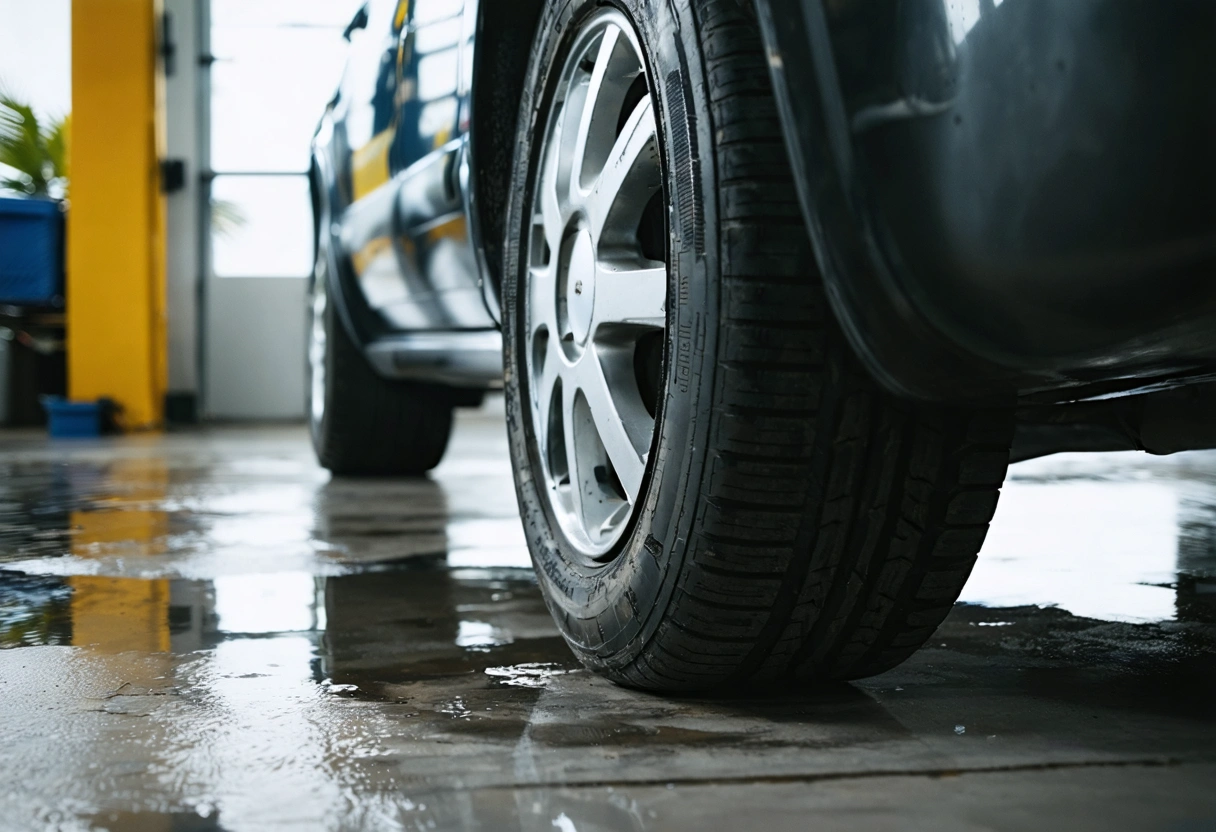
Cabin leaks and hidden water intrusion
Water intrusion does not always come from driving through floodwater. It can enter through worn door seals, clogged sunroof drains, damaged windshield urethane, cracked body seam sealer, or trunk weatherstripping. Once moisture reaches the carpet, it can remain trapped in padding and insulation, creating odors, mold growth, corrosion, and electrical damage beneath the surface.
A repair professional can perform water testing to trace leaks accurately. This may involve controlled water application, interior trim inspection, drain tube cleaning, seal replacement, or windshield resealing. Addressing these problems before hurricane season helps keep the interior dry and protects sensitive components that may be located under seats, behind kick panels, or in the trunk area.
Lighting, visibility, and driver assistance sensors
Heavy rain and dark storm skies make lighting and visibility systems essential. Headlight lenses should be clear, bulbs should be bright, and all exterior lights should work reliably. Cloudy headlight lenses reduce light output and can make it harder to see debris, standing water, pedestrians, or stalled vehicles.
Many newer vehicles also use cameras and radar sensors for safety features. Windshield-mounted cameras, bumper sensors, and parking assist components can be affected by misalignment, damage, or water intrusion. If the vehicle has recently had windshield replacement, bumper repair, or collision work, calibration may be necessary for these systems to function correctly in poor weather.
Floodwater Damage: What to Do and What to Avoid
Floodwater is one of the most destructive storm hazards for vehicles. Even relatively shallow water can reach wheel bearings, brake components, exhaust parts, wiring connectors, and low-mounted control modules.
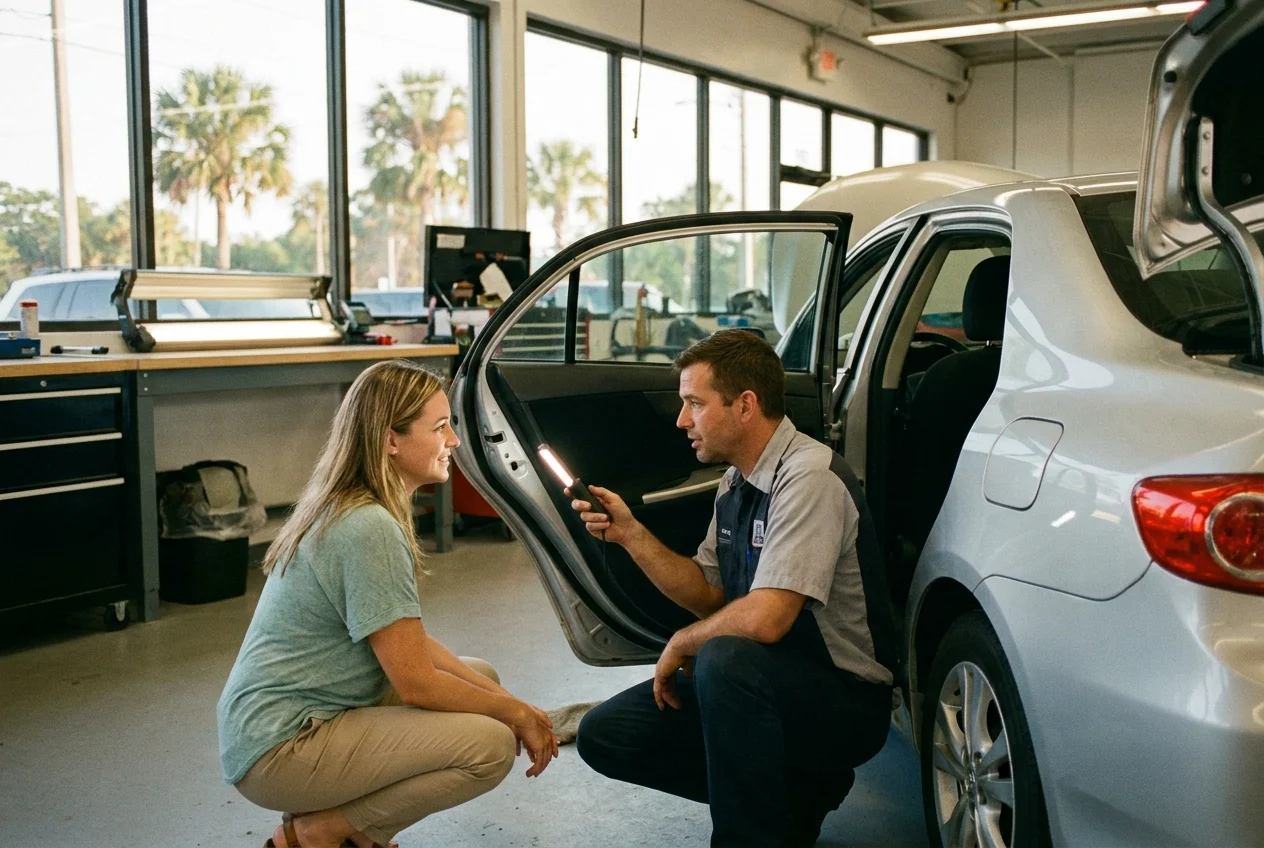
The most important rule is simple: avoid driving through standing water whenever possible. It is difficult to judge depth, road condition, current strength, and hidden obstacles.
If your car has been exposed to floodwater
If water reached the lower doors, entered the cabin, or came near the engine intake, do not attempt to start the vehicle until it has been inspected.
Technicians may inspect engine oil, transmission fluid, differential fluid, brake components, wheel bearings, exhaust, air intake, carpets, seat electronics, and wiring. Fluids that appear milky, foamy, or unusually high on the dipstick may indicate water contamination.
Why expert diagnosis matters after a flood
Flood damage is not always visible from the outside. A car may start and drive immediately after exposure, then develop electrical faults, musty odors, transmission problems, bearing noise, or brake issues later.
Specialized repair decisions also depend on the type of water involved. Fresh rainwater is damaging, but saltwater and contaminated floodwater are far more corrosive. Salt residue can remain on underbody parts, connectors, and fasteners, continuing to attract moisture even after the vehicle appears dry.
Post-Storm Inspection and Recovery Repairs
After a hurricane passes, many drivers focus on clearing debris and returning to routine travel. However, your vehicle may need attention even if it was parked during the storm.
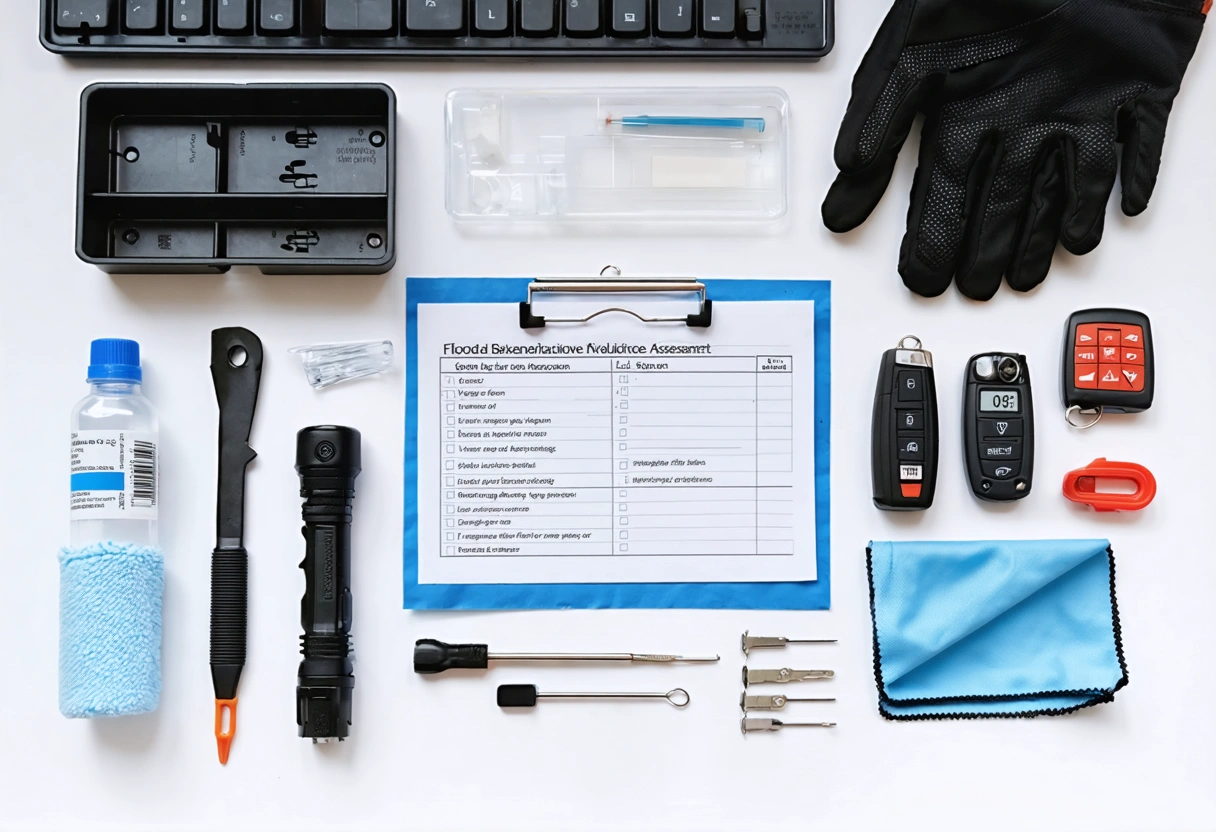
A post-storm inspection should include the undercarriage, brakes, tires, suspension, exhaust, lighting, glass, paint, and interior. Look for new warning lights, unusual smells, soft brake pedal feel, pulling during braking, grinding noises, vibration, water stains, damp carpet, or trouble starting.
Undercarriage cleaning and corrosion prevention
If the vehicle was exposed to saltwater spray, flooded streets, or coastal storm surge residue, undercarriage cleaning can help remove corrosive deposits. Areas around the brakes, suspension, frame members, fuel lines, and exhaust should be rinsed thoroughly and inspected for damage.
Professional shops can identify early corrosion, missing splash shields, damaged liners, and loose protective panels. Replacing a missing underbody shield may seem minor, but those panels often help keep water and debris away from belts, pulleys, wiring, and engine bay components.
Paint, glass, and body repairs after debris impact
Flying branches, gravel, roof materials, and other storm debris can chip paint, crack
Need help with Weathering the Storm: Preparing Your Car for Hurricane Season with Expert Repairs?