
A collision can affect much more than a vehicle’s visible body panels. Even when dents and paint damage appear minor, the force of impact may shift structural components or alter the suspension geometry that keeps the wheels positioned correctly.
Recognizing the early signs of frame damage and alignment problems can help prevent uneven tire wear, unstable handling, and additional stress on steering or suspension parts. A professional inspection is especially important because structural changes are not always visible from outside the vehicle.
How a Collision Can Affect Vehicle Structure and Alignment
A vehicle’s frame or unibody provides the structural foundation for the body, suspension, steering system, and safety components. During a crash, impact energy can bend, twist, compress, or shift portions of this structure. Even a relatively low-speed collision can alter critical mounting points if the force reaches the suspension or structural rails.
Wheel alignment depends on precise angles between the wheels, suspension, and road surface. If a control arm, strut, subframe, or structural mounting point moves out of position, a standard alignment adjustment may not fully correct the problem.
Frame Damage Versus Wheel Misalignment
Wheel misalignment can occur after hitting a pothole, curb, or road hazard without causing structural damage. In these situations, a technician may be able to restore the correct camber, caster, and toe angles through routine alignment procedures.
Frame or unibody damage is more complex because it can change the fixed reference points used to align the suspension. When those points are displaced, repeated alignments may fail, or the vehicle may quickly begin pulling and wearing tires unevenly again.
Warning Signs That Should Not Be Ignored
Some collision-related alignment problems become noticeable immediately, while others develop gradually as tires and suspension components wear. Drivers should pay close attention to changes in steering feel, vehicle stability, tire condition, and body panel fit after any significant impact.
No single symptom confirms frame damage on its own. However, multiple warning signs can indicate that the vehicle needs a professional alignment check and structural inspection rather than a basic visual assessment.
The Vehicle Pulls to One Side
A vehicle that consistently drifts left or right on a level road may have incorrect alignment angles, damaged suspension parts, or shifted structural mounting points.
The Steering Wheel Is Off Center
When the steering wheel sits at an angle while the vehicle travels straight, the toe settings or steering components may be out of position. If an alignment cannot center the wheel and maintain proper tracking, hidden structural movement may be contributing to the issue.
Tires Show Uneven or Rapid Wear
Feathered tread, excessive wear along one edge, or different wear patterns across the tires can indicate that the wheels are not contacting the road at the correct angles.
Body Panels No Longer Align Properly
Uneven gaps around the hood, trunk, doors, or fenders can suggest that the body structure has shifted. Doors that stick, weather seals that no longer fit, or a trunk lid that requires extra force to close may also point to distortion that warrants precise structural measurement.
Unusual Steering or Suspension Behavior
A damaged vehicle may feel loose, unstable, or unusually sensitive to steering input. The steering might also feel heavier in one direction, fail to return smoothly after a turn, or require frequent corrections to keep the vehicle in its lane.
Clunking, creaking, scraping, or popping sounds while turning or driving over bumps should also be investigated. Such noises may indicate damaged control arms, struts, tie rods, bushings, wheel bearings, or structural attachment points.
The Vehicle Appears to Travel Sideways
A vehicle with serious alignment or structural problems may appear to move at a slight angle even though the front wheels are pointed forward. This condition is sometimes called dog tracking or crab walking.
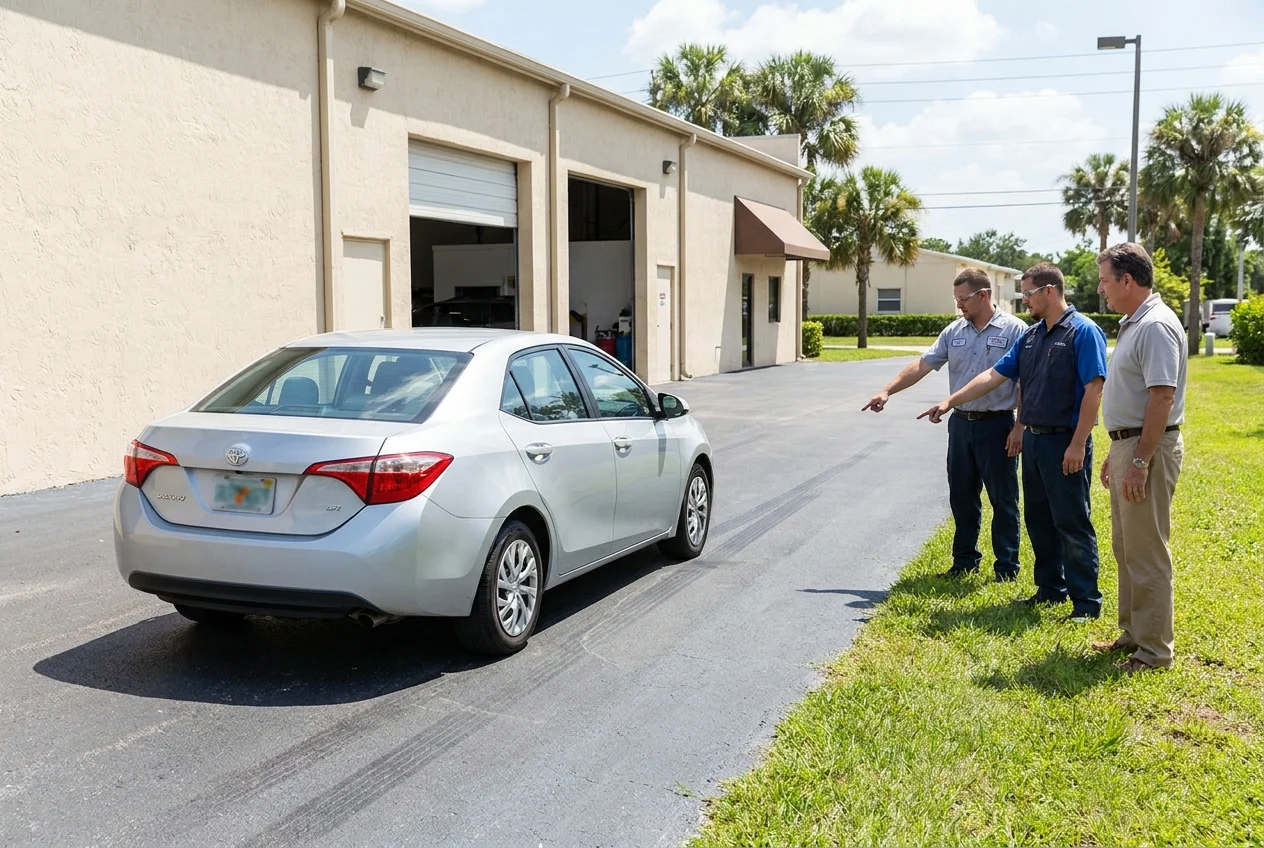
This issue can reduce stability, accelerate tire wear, and make the vehicle more difficult to control during sudden maneuvers. It generally requires more than a simple front wheel alignment.
Ride Height Is Uneven
After a collision, one corner of the vehicle may sit lower or higher than the others. A broken spring, bent strut, damaged suspension arm, or displaced mounting point may be responsible.
Ride height should be measured on a level surface using manufacturer reference points. Visual comparisons alone may be misleading because tire pressure, cargo weight, and pavement slope can alter the vehicle’s appearance.
Visible Wrinkles or Distortion Appear in Structural Areas
Cracks, buckling, ripples, or unusual folds in the floor pan, trunk floor, inner fenders, radiator support, or engine compartment may indicate that collision energy reached the vehicle structure.
Some evidence remains concealed beneath trim, carpeting, splash shields, or exterior panels. For this reason, the absence of visible distortion does not rule out structural damage.
Driver Assistance Features Behave Differently
Many modern vehicles use cameras, radar sensors, steering angle sensors, and wheel position data to operate lane keeping assistance, adaptive cruise control, automatic emergency braking, and stability control.
Warning lights, unavailable safety features, unexpected steering corrections, or inaccurate lane detection may indicate that alignment and sensor calibration are needed. Calibration should be completed according to manufacturer procedures after related structural, suspension, glass, or body repairs.
Why a Visual Inspection Is Not Enough
Structural movement can be measured in millimeters, yet even a small change may affect suspension geometry, panel fit, and sensor calibration. Damage may also travel beyond the obvious point of impact.
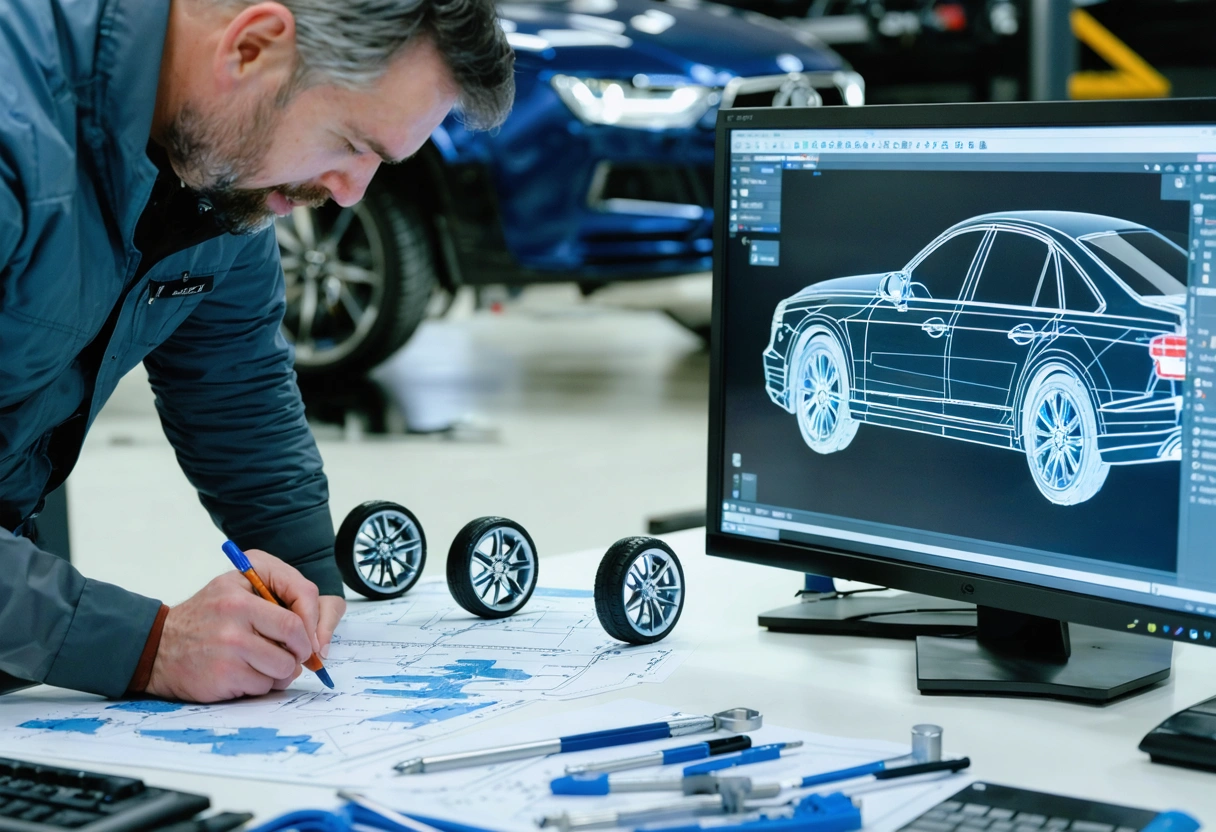
A repair facility can compare the vehicle with manufacturer dimensions using computerized measuring equipment. Technicians may inspect upper body points, underbody reference locations, suspension mounts, wheelbase measurements, and diagonal dimensions.
Four Wheel Alignment Measurements
A computerized four wheel alignment measures the relationship between all four wheels. Toe describes whether the wheels point inward or outward when viewed from above.
The thrust angle is also important because it shows the direction in which the rear wheels push the vehicle. If the rear suspension or structure is displaced, the thrust angle may cause an off center steering wheel or sideways tracking even when the front toe has been adjusted.
Alignment readings outside specifications do not automatically prove that the frame is damaged. Bent suspension parts, worn joints, incorrect ride height, damaged wheels, or tire problems can produce similar results.
Pre Alignment Checks
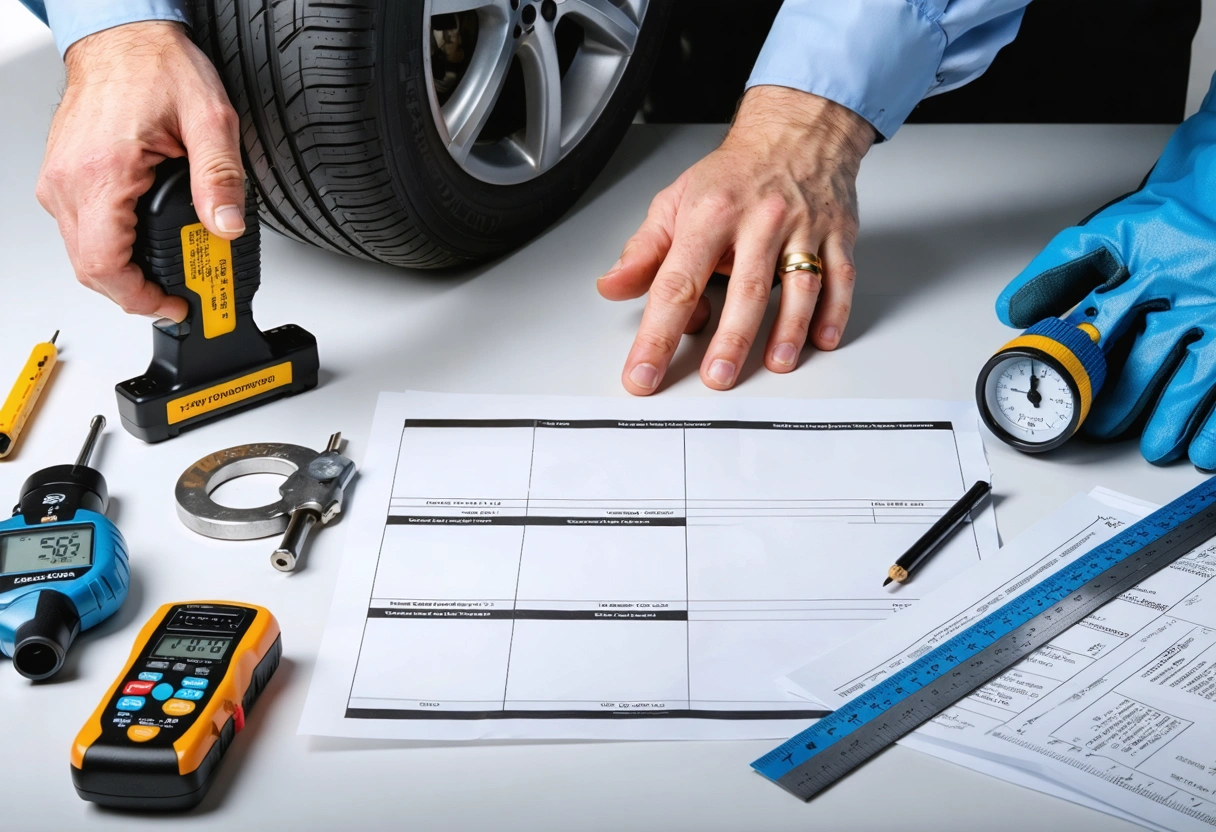
Before making adjustments, a technician should inspect tire pressure, tread condition, wheel runout, ride height, steering linkage, suspension joints, springs, struts, and wheel bearings. Aligning a vehicle with loose or bent components may produce inaccurate readings and will not correct the underlying safety issue.
The vehicle may also need to be loaded or prepared according to manufacturer requirements. Some models specify fuel levels, ballast, electronic setup procedures, or suspension settling steps before final measurements are taken.
When a Standard Alignment Is Not Sufficient
A routine alignment changes adjustable suspension settings. It cannot straighten a bent control arm, reposition a shifted subframe without additional work, or restore distorted unibody mounting points.
Structural repair may involve controlled pulling on a frame machine, replacement of damaged sections, restoration of suspension mounting locations, or replacement and positioning of a subframe.
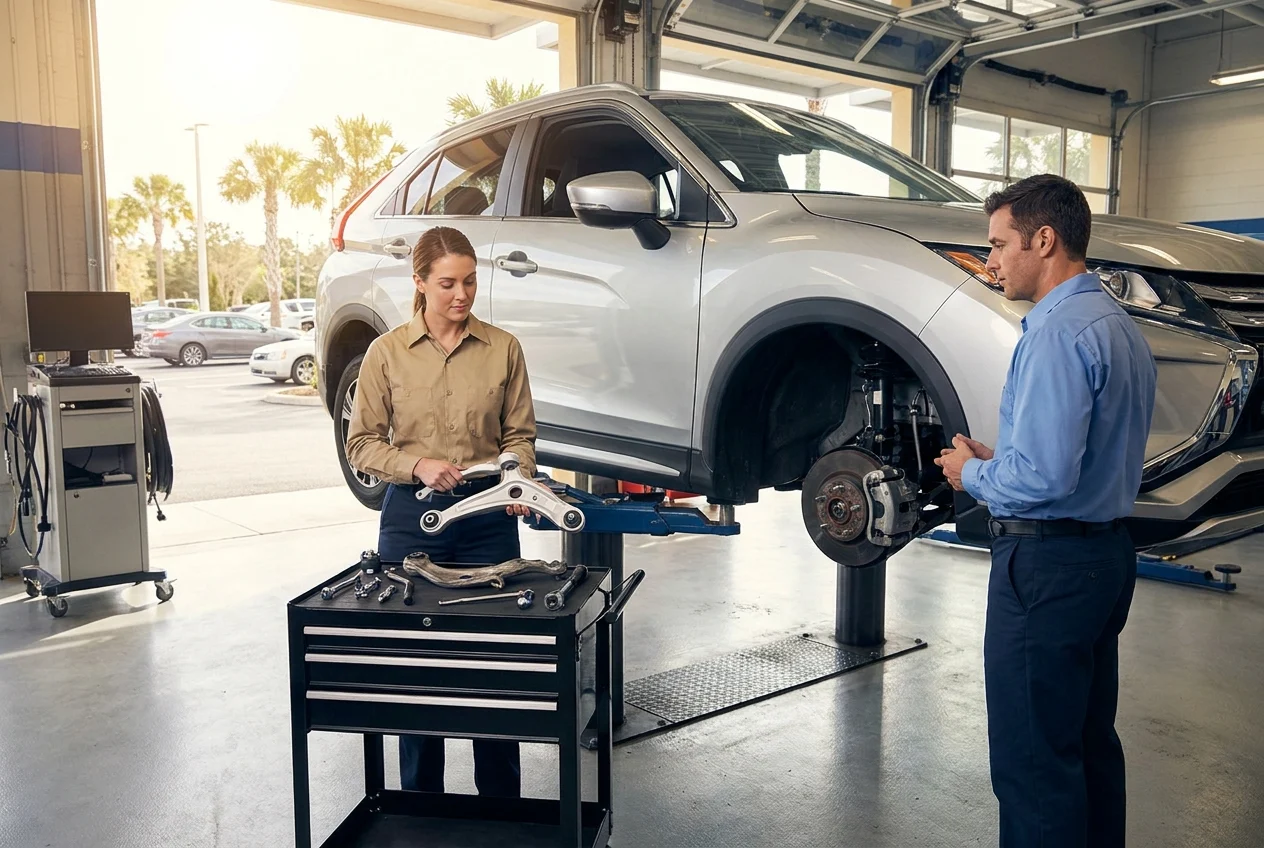
Suspension and Steering Parts May Need Replacement
Components that look normal at a glance can still be bent enough to affect alignment. Common collision related damage includes bent tie rods, control arms, struts, steering knuckles, hubs, crossmembers, and subframes.
Damaged parts should not be forced into alignment through excessive adjustment. Replacing or correctly repositioning them helps restore geometry without masking the problem.
Structural Straightening Must Be Verified
When straightening is required, measurements should be taken before, during, and after the repair. Final dimensions must be compared with manufacturer tolerances, and the alignment should be checked again after the structure and suspension are restored.
A printed structural measurement report and final alignment report can document the condition of the vehicle. These records may also help explain which corrections were performed and whether all adjustable angles returned to specification.
How Professional Repair and Alignment Typically Proceed
Damage Assessment and Diagnostic Scanning
The process begins with a review of the impact location, vehicle behavior, visible damage, and repair history. Technicians may remove selected trim or shields to inspect concealed areas.
Structural and Suspension Measurement
The vehicle is measured against model specific dimensional data, while steering and suspension parts are checked for deformation or looseness. Tire and wheel condition should also be evaluated because a bent wheel or internally damaged tire can imitate alignment symptoms.
Structural and Mechanical Repairs
Structural corrections are generally completed before final alignment. Bent or damaged suspension and steering components are then replaced or repositioned according to specifications. Fasteners that are designated for one time use should be replaced, and critical connections should be tightened using the required torque procedures.
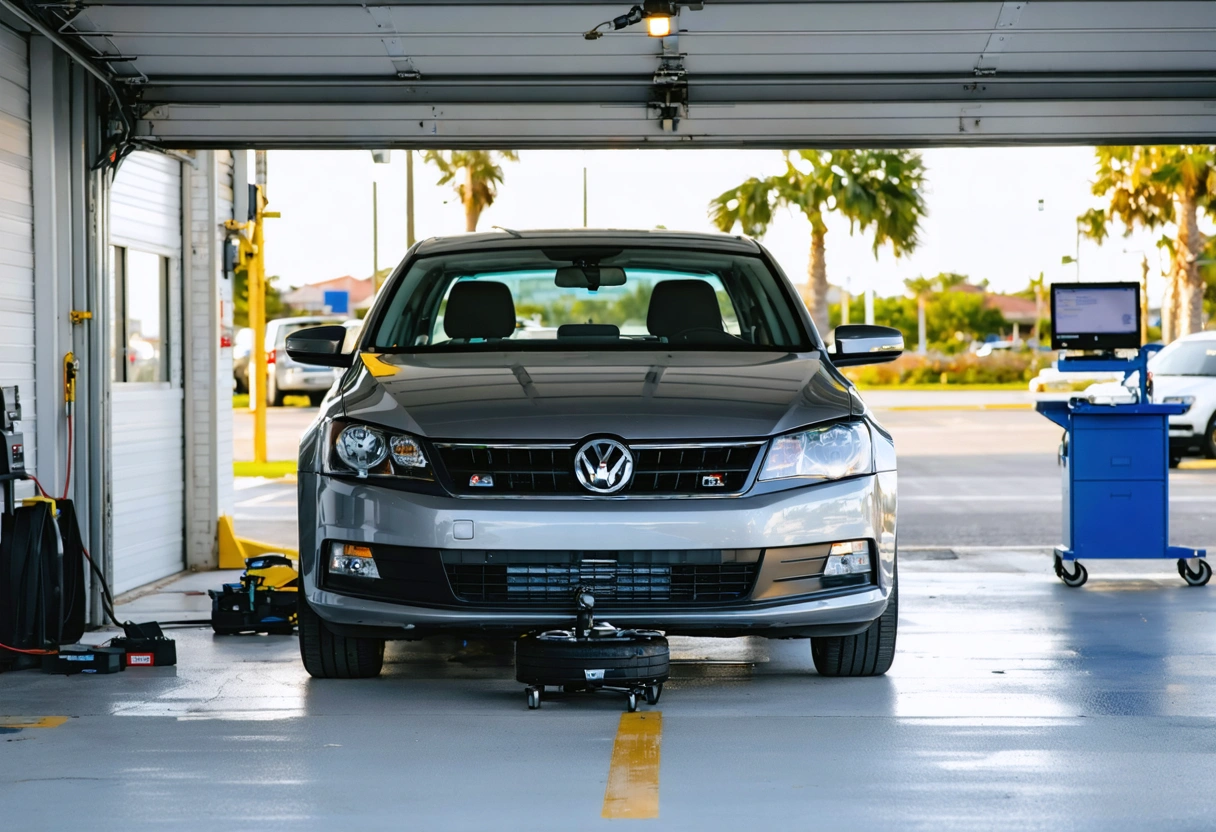
Final Alignment and Calibration
Once the structure, steering, and suspension are restored, the technician performs a four wheel alignment. Vehicles equipped with advanced driver assistance systems may then require static calibration, dynamic calibration, or both.
Road Testing and Final Verification
A controlled road test confirms that the steering wheel remains centered, the vehicle tracks straight, and no unusual noises or vibrations remain. A post repair diagnostic scan can verify that related fault codes have been resolved and safety systems are operating correctly.
What to Do After a Collision
Avoid relying solely on visible damage or waiting for tire wear to appear. Record any changes in steering, handling, braking, noises, or warning lights, and arrange an inspection with a collision repair facility that can perform both structural measurements and four wheel alignment checks.
If the vehicle pulls severely, rubs a tire, has damaged suspension parts, or feels unstable, it should not be driven. Towing can prevent further damage and reduce the risk of losing control.
Keep Repair and Measurement Records
Retain estimates, diagnostic scan results, structural measurement reports, alignment printouts, calibration documentation, and parts invoices. These records provide useful evidence that collision related systems were inspected and restored to the required specifications.
Protecting Safety and Long Term Vehicle Performance
Promptly addressing frame damage and alignment problems helps preserve predictable handling, tire life, braking stability, and proper operation of driver assistance features. A complete repair should correct the underlying structural or mechanical damage rather than simply adjusting the wheels enough to improve tracking temporarily.
Professional measurement, manufacturer compliant repairs, final alignment, calibration, and road testing provide the strongest confirmation that the vehicle is ready to return to service.
Need help with Frame Damage After a Crash: Signs Your Vehicle Needs Professional Alignment?