A dent may look like a minor cosmetic problem, but the visible depression is not always the full extent of the damage. Paintless dent repair, commonly called PDR, can be an excellent option when the factory paint remains intact and the metal can be carefully reshaped. However, certain dents require conventional auto body repair to restore the vehicle’s appearance, structural integrity, and corrosion protection.
Understanding what determines the right repair method can help you avoid incomplete repairs and future problems. A qualified technician will evaluate the paint, metal, panel location, and any hidden damage before recommending the safest and most effective approach.
How Technicians Determine Whether PDR Is Appropriate
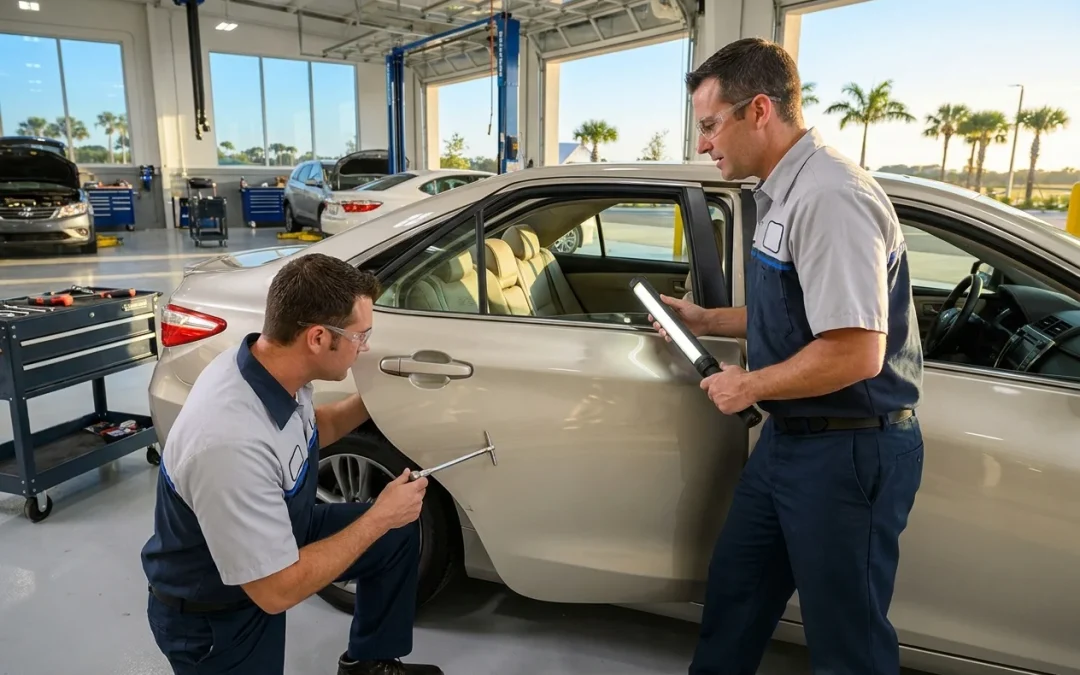
Paintless dent repair uses specialized tools and controlled pressure to return a damaged panel to its original shape without sanding, body filler, or repainting. It is often effective for shallow door dings, minor creases, and some hail damage, particularly when the affected panel still has its original flexible finish.
The decision is not based on dent size alone. Technicians also examine the depth and shape of the damage, the condition of the paint, the type of metal, and whether the back of the panel is accessible. A broad, shallow dent may respond well to PDR, while a smaller but sharply creased dent could require more extensive work.
Paint condition and metal movement
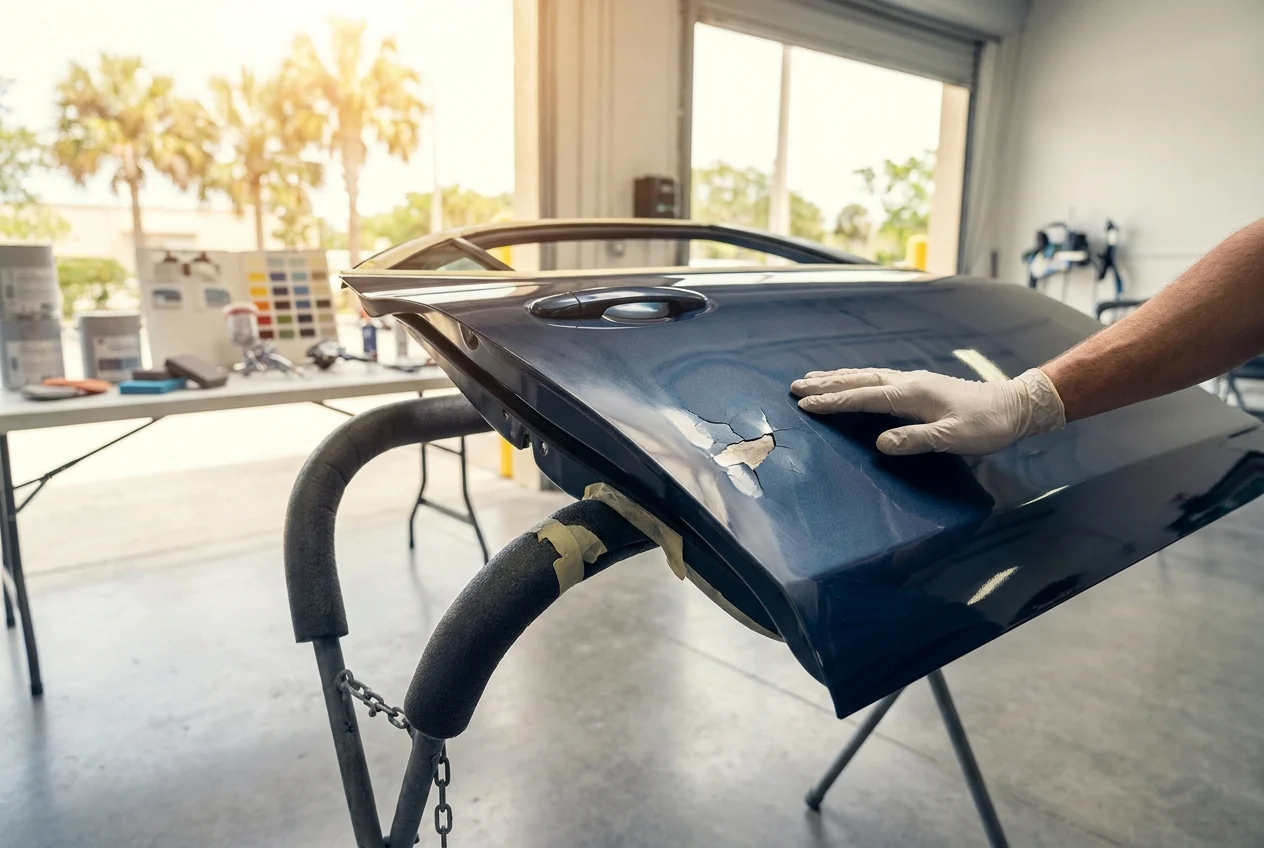
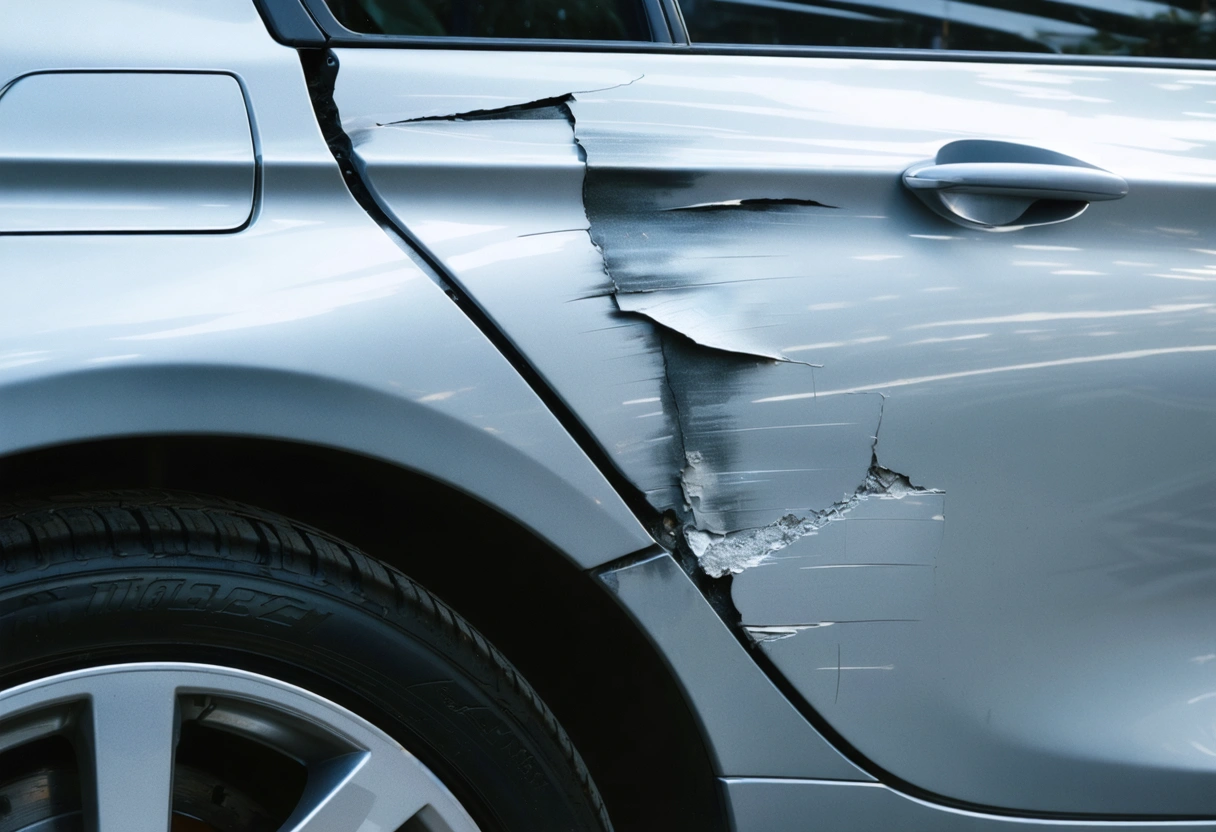
Intact paint is one of the most important requirements for PDR. If the finish has cracked, chipped, peeled, or separated from the panel, reshaping the metal will not address the exposed surface. Conventional repair and paint refinishing may be necessary to seal the panel and create a durable, uniform finish.
Metal also stretches when an impact is concentrated or severe. Once a panel has been significantly stretched, it may not hold its original contour through PDR techniques alone. In those cases, a technician may need to reshape the area, apply body filler where appropriate, sand the repair, and refinish the panel.
Warning Signs That a Dent Requires Conventional Body Repair
Visible paint damage is a clear indication that a dent may need more than paintless repair. Cracks and chips can allow moisture to reach bare metal, increasing the risk of corrosion. This concern is especially relevant in Port Charlotte, where humidity, rain, and coastal air can accelerate deterioration when damaged surfaces are left unprotected.
Sharp creases, deep impact points, torn metal, and dents located along panel edges or body lines can also limit the effectiveness of PDR. These areas are often reinforced, tightly curved, or difficult to access from behind. Restoring them correctly may require conventional metalwork and professional paint refinishing.
Damage beneath the visible surface
A dent near a bumper, wheel opening, door, or quarter panel may be accompanied by broken clips, damaged brackets, misaligned components, or compromised impact absorbing materials. Although the outer panel may appear repairable, hidden damage can affect fit, function, and occupant protection.
Warning signs include uneven panel gaps, doors that no longer open smoothly, unusual noises, loose trim, and warning lights that appeared after the impact. A professional inspection can identify these concerns and determine whether disassembly, part replacement, structural measurement, or additional collision repair is needed.
Common Dent Scenarios That Often Need More Than PDR
Every dent should be evaluated individually, but certain types of damage are more likely to require conventional auto body repair. The force and direction of the impact, the panel material, and the dent’s proximity to reinforced areas all influence the repair plan.
Dents with cracked or missing paint
If paint has cracked, flaked, or chipped away, correcting the panel shape is only part of the repair. The damaged finish must also be removed or feathered, and any exposed metal must be properly prepared to prevent corrosion. The area may then require primer, color matching, clear coat, and controlled refinishing to restore its appearance and protection.
Deep dents and sharp impact points
A concentrated impact from a shopping cart corner, trailer hitch, roadway object, or another vehicle can create a deep center point surrounded by stretched metal. Even if the paint appears intact, the panel may no longer have enough tension to maintain its original contour after PDR. Conventional metal repair or panel replacement may produce a more stable and accurate result.
Dents across body lines
Body lines are the defined ridges and contours that give a vehicle its shape. Metal along these lines is often more rigid than a broad, flat section of a panel. A collision that flattens or distorts a body line can require precise metalwork, surface preparation, and refinishing to recreate the original profile.
Damage along panel edges
Dents near the edge of a hood, door, fender, trunk lid, or quarter panel can be difficult to access with PDR tools. Panel edges may also contain folded seams, adhesive, bracing, or multiple layers of metal. If the edge is bent or crushed, conventional straightening or replacement may be necessary to restore proper alignment.
Previous repairs in the damaged area
PDR is most predictable on original panels with factory paint. If an area was previously repaired with body filler or repainted, tool pressure can crack the finish or disturb the underlying repair material. A technician may use paint thickness measurements and visual inspection to determine whether prior work affects the available options.
When Panel Replacement May Be the Better Choice
Conventional repair does not always mean the damaged panel will be saved. Replacement may be recommended when metal is torn, severely stretched, extensively creased, or damaged in several overlapping areas. A panel may also need replacement when repairing it would require excessive filler or labor without delivering a durable, factory-like result.
The decision involves more than comparing the price of a replacement panel with the cost of straightening the existing one. Technicians must consider labor time, material requirements, corrosion protection, adjacent panel blending, and the procedures specified by the vehicle manufacturer. The goal is to choose the method that provides dependable fit, finish, and performance.
Repairing versus replacing bolt-on and welded panels
Bolt-on parts such as many hoods, fenders, doors, and trunk lids may be relatively straightforward to replace, although they still require careful alignment and refinishing. Quarter panels and other welded components involve a more complex process. Their replacement may require sectioning, welding, seam sealing, corrosion protection, and refinishing according to manufacturer procedures.
For that reason, a skilled technician will not automatically replace a welded panel because it has a dent. If the panel can be restored safely and durably, repair may preserve more of the vehicle’s original construction. If the damage is too severe, replacement may be the correct choice.
Why Bumper Dents Require Special Evaluation
Many modern bumpers use flexible plastic covers rather than exposed metal. A dented bumper cover may sometimes be reshaped with controlled heat and pressure, but this process is not the same as traditional PDR. Cracks, punctures, torn mounting tabs, distorted edges, and damaged paint usually require plastic repair, refinishing, or replacement.
The cover can also hide damage to the energy absorber, reinforcement bar, brackets, wiring, and nearby body structure. A low-speed impact that leaves only a modest exterior mark may still compress components designed to manage collision energy. Removing the bumper cover may be necessary to determine the full extent of the damage.
Sensors and driver assistance technology
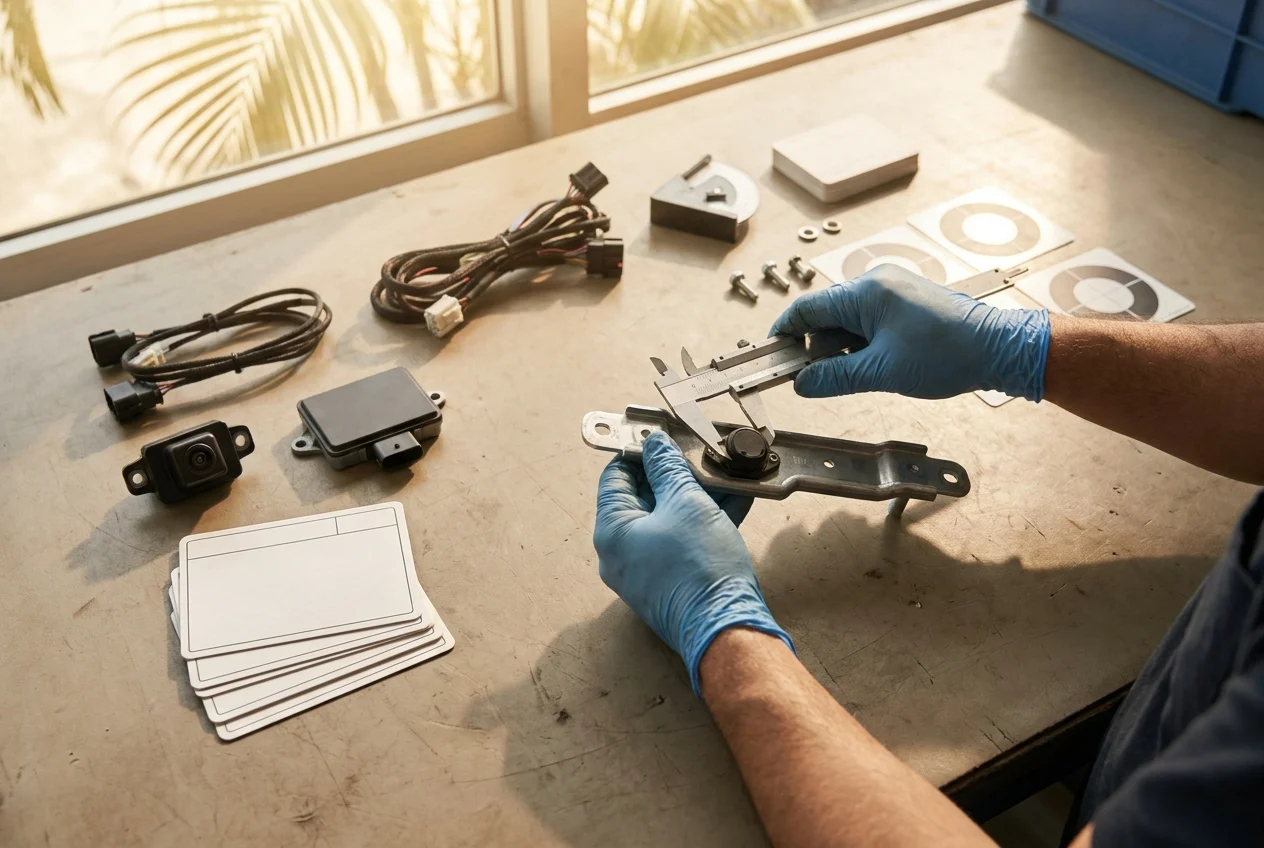
Bumpers, mirrors, grilles, and other exterior areas may contain parking sensors, cameras, radar units, and related wiring. A dent or impact can change a sensor’s mounting position even when the device has not visibly broken. This can affect systems such as blind spot monitoring, parking assistance, forward collision warning, and automatic emergency braking.
When repairs involve these components, diagnostic scanning or calibration may be required after the body work is completed. Proper repair planning should account for the technology installed on the specific vehicle rather than treating the damage as cosmetic only.
What Conventional Dent Repair Involves
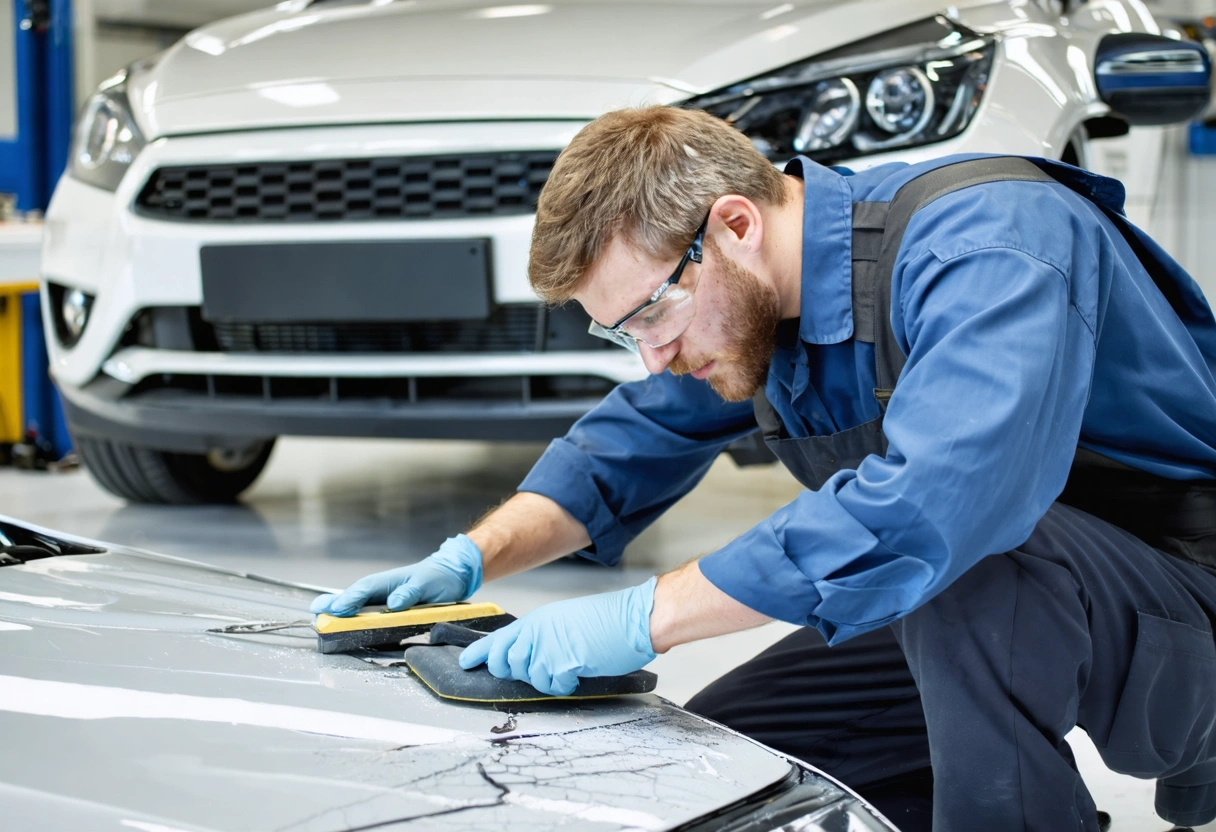
Conventional dent repair is a controlled process designed to restore the panel’s contour and finish. Depending on the damage, a technician may remove trim and adjacent components, gain access to the back of the panel, pull or straighten the metal, and repair damaged edges or body lines.
Once the panel is correctly shaped, a thin application of body filler may be used to refine minor surface irregularities. The area is then sanded and prepared for primer.
Color matching requires more than selecting a paint code. Sun exposure, age, factory variations, and previous refinishing can affect the existing color. Technicians may create spray-out samples and blend color into an adjacent area when necessary to achieve a seamless transition.
Corrosion protection after repair
Any process that exposes bare metal or affects factory coatings must be followed by appropriate corrosion protection. This may include primers, seam sealers, cavity wax, and protective coatings on the back of repaired areas.
Why a Professional Inspection Matters
Photos can help a repair shop understand the general location and severity of a dent, but they do not always reveal stretched metal, subtle paint fractures, prior body work, or hidden collision damage.
An in-person inspection allows a technician to view the panel from several angles, feel the contour, evaluate the finish, and check nearby components. The technician may also look inside the trunk, wheel well, door opening, or engine compartment for displaced seams and mounting points.
Some repair plans cannot be finalized until damaged parts are removed. This disassembly process can reveal broken retainers, bent brackets, damaged wiring, or deformation behind the exterior panel.
Questions to Ask About the Recommended Repair
Vehicle owners should feel comfortable asking why PDR, conventional repair, or replacement has been recommended. A reputable repair professional should be able to explain how the paint condition, metal movement, access, panel construction, and hidden damage influenced the decision.
Helpful questions include whether the finish is broken, whether the metal appears stretched, and whether any safety systems or structural components are located behind the dent.
If an insurance claim is involved, the initial estimate may change after disassembly reveals additional damage. This is commonly addressed through a supplemental estimate submitted to the insurer.
American Auto Body evaluates dents based on the complete condition of the vehicle, not appearance alone. Drivers in Port Charlotte can rely on experienced technicians to identify hidden damage and recommend a repair approach focused on safety, durability, and a high-quality finish.
Need help with When Does a Dent Need More Than Paintless Dent Repair??
