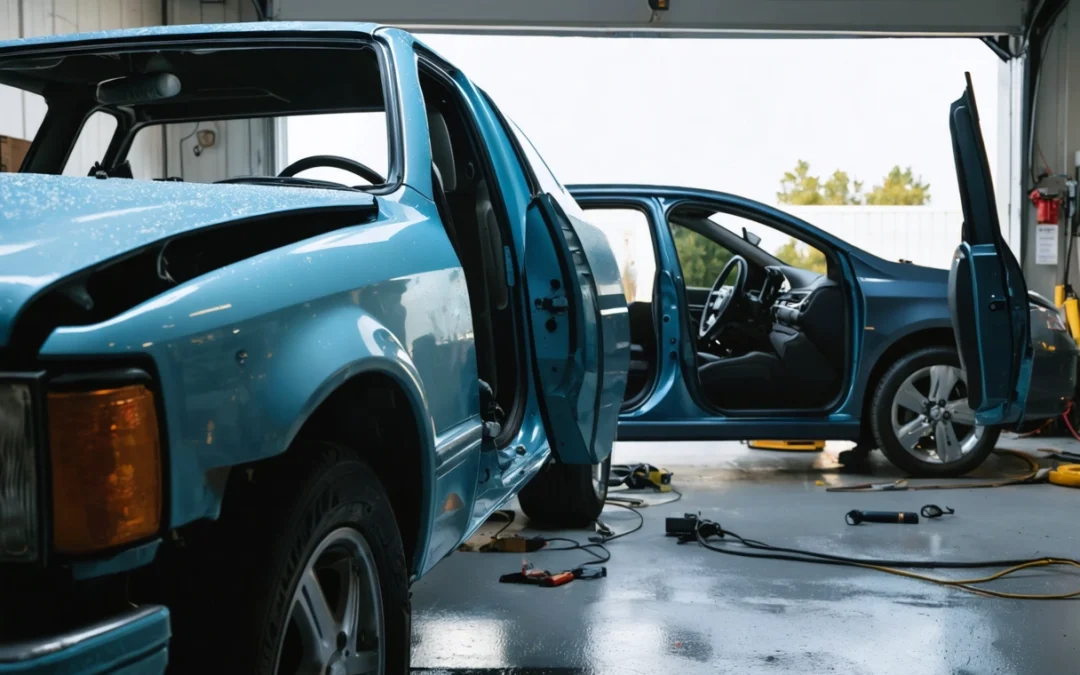
After a collision, the most visible damage is often a dented door, creased panel, or misaligned body line. However, what you can see on the surface may only be part of the story. Modern vehicles rely on carefully engineered panels, reinforced pillars, crumple zones, sensors, and frame components that all work together to protect occupants and preserve drivability.
Expert door, panel, and structural repair after an accident is about more than making a vehicle look good again. It involves inspection, measurement, material-specific repair methods, and precise refinishing to restore safety, function, and appearance as closely as possible to pre-accident condition.
Why Visible Body Damage May Point to Deeper Issues
A damaged door or exterior panel can sometimes make a collision seem minor, especially if the vehicle is still drivable. In reality, impact energy can travel through hinges, pillars, rocker panels, floor sections, and adjoining structural components. A crease in a quarter panel or a door that no longer closes smoothly may indicate that the surrounding structure has shifted out of specification.
Professional repair technicians look beyond the damaged surface to determine how far the impact traveled. They inspect panel gaps, latch alignment, hinge movement, weather sealing, suspension mounting areas, and hidden reinforcements. This process helps identify whether the repair requires cosmetic panel work, replacement parts, structural correction, or a combination of methods.
Common Signs That Damage Is Not Just Cosmetic
Some warning signs are easy for drivers to notice before the vehicle reaches a repair facility. A door may require extra force to close, make new wind noise at highway speeds, or allow water to enter during rain. Body lines may appear uneven, trim pieces may no longer sit flush, or the vehicle may pull to one side if the impact affected alignment-related structure.
Other issues are harder to detect without specialized tools. Hidden buckling behind a panel, cracked seam sealer, distorted mounting points, or compromised corrosion protection can all affect long-term durability. That is why a thorough post-accident inspection is an important first step before any estimate is considered complete.
How Technicians Evaluate Doors, Panels, and Vehicle Structure
The repair process typically begins with a detailed assessment of the collision damage. Technicians document visible dents, scratches, broken components, and panel misalignment, then compare the vehicle against factory specifications. This helps determine whether a panel can be repaired or must be replaced to meet safety and quality standards.
For structural concerns, repair facilities may use computerized measuring systems, frame equipment, and manufacturer repair procedures. These resources allow technicians to identify deviations that may not be visible to the eye. Even small measurement differences can matter because modern vehicle safety systems depend on precise body geometry.
The Role of Manufacturer Repair Procedures
Vehicle manufacturers provide repair guidelines that specify approved techniques, replacement requirements, weld locations, adhesive use, and corrosion protection methods. These procedures are especially important for vehicles made with advanced high-strength steel, aluminum, composites, or mixed materials. Using the wrong repair method can weaken a component or interfere with crash performance.
An expert repair team follows these guidelines to decide whether to straighten, section, replace, bond, rivet, or weld affected parts. This structured approach helps protect the integrity of doors, panels, pillars, rails, and other components that contribute to occupant safety during a future collision.
What Happens During Expert Door Repair
Door damage can involve more than an outer skin dent. A vehicle door contains hinges, latches, intrusion beams, wiring, speakers, window regulators, seals, airbags, sensors, and trim components. When a door is struck, any of these parts may be affected, even if the exterior damage appears limited.
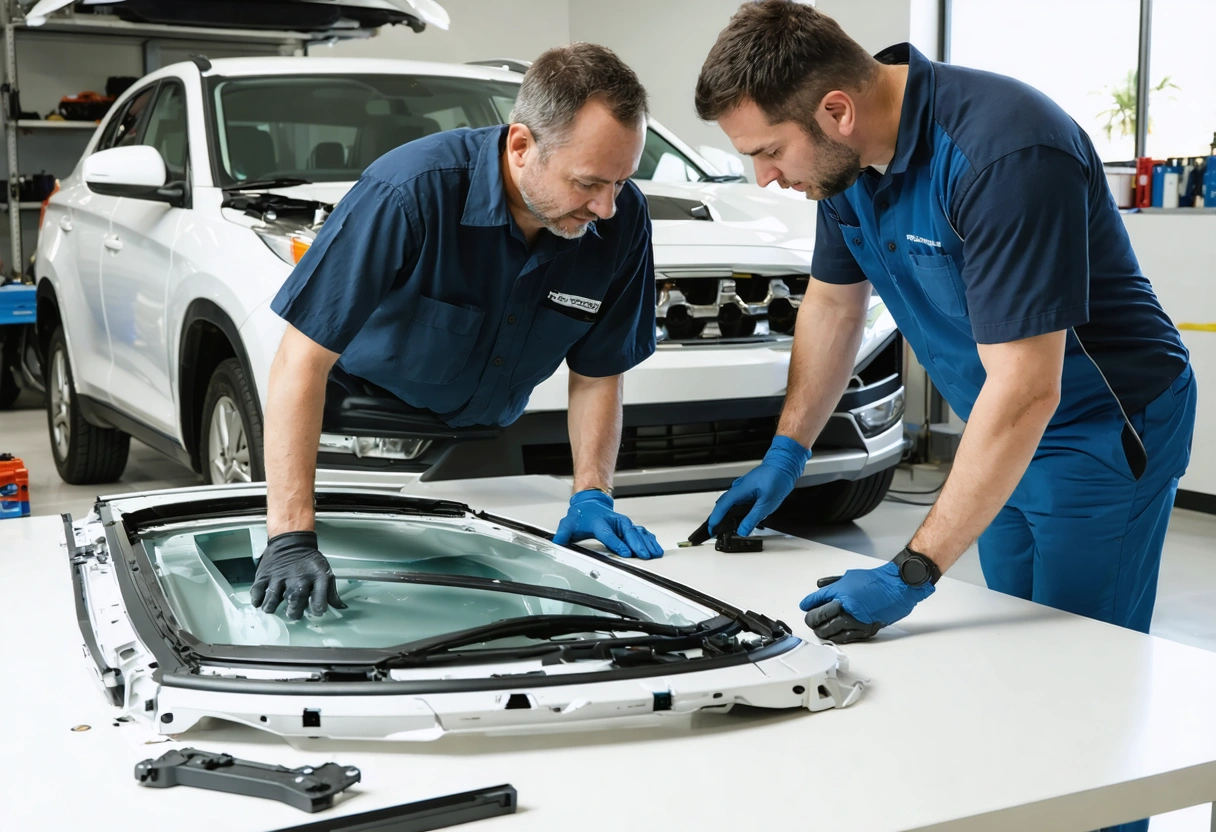
Technicians begin by checking whether the door opens, closes, locks, and seals correctly. They inspect hinge alignment, latch engagement, striker position, glass movement, mirror operation, and electrical functions. If the door has side impact sensors or airbag components, those systems may also need diagnostic checks to confirm they are functioning properly.
Repairing Versus Replacing a Damaged Door
Whether a door can be repaired depends on the location, severity, and type of damage. A shallow dent in the outer panel may be repairable with metal finishing, paintless dent repair, or conventional body repair methods. However, deep creases, torn metal, damage near intrusion beams, or compromised mounting areas may require door shell replacement.
Replacement may also be necessary when the structure inside the door has been weakened. For example, if a side impact beam is bent or separated, restoring only the outer appearance would not properly address the safety function of the door. Expert repair focuses on returning both the visible and hidden components to the correct condition.
Restoring Fit, Sealing, and Daily Function
A properly repaired door should not require slamming, rubbing, or adjustment by the driver. It should close with even gaps, align with nearby panels, seal out wind and water, and allow glass and locks to operate normally. Small alignment errors can lead to premature weatherstrip wear, wind noise, water leaks, or latch strain over time.
Technicians make careful adjustments to hinges, strikers, and surrounding panels to achieve proper fit. They may also perform water testing or road testing when needed, especially if the accident caused sealing concerns or cabin noise. This level of detail helps ensure the repair feels correct in everyday use, not just in a parking lot inspection.
Panel Repair and Replacement Expectations
Exterior panels such as fenders, quarter panels, hoods, deck lids, rocker panels, and bumper covers play a major role in both appearance and protection. Some panels are bolt-on components that can be removed and replaced more easily, while others are welded, bonded, or integrated into the vehicle body. The repair approach depends on how the panel is attached, what material it is made from, and whether adjacent components were affected.
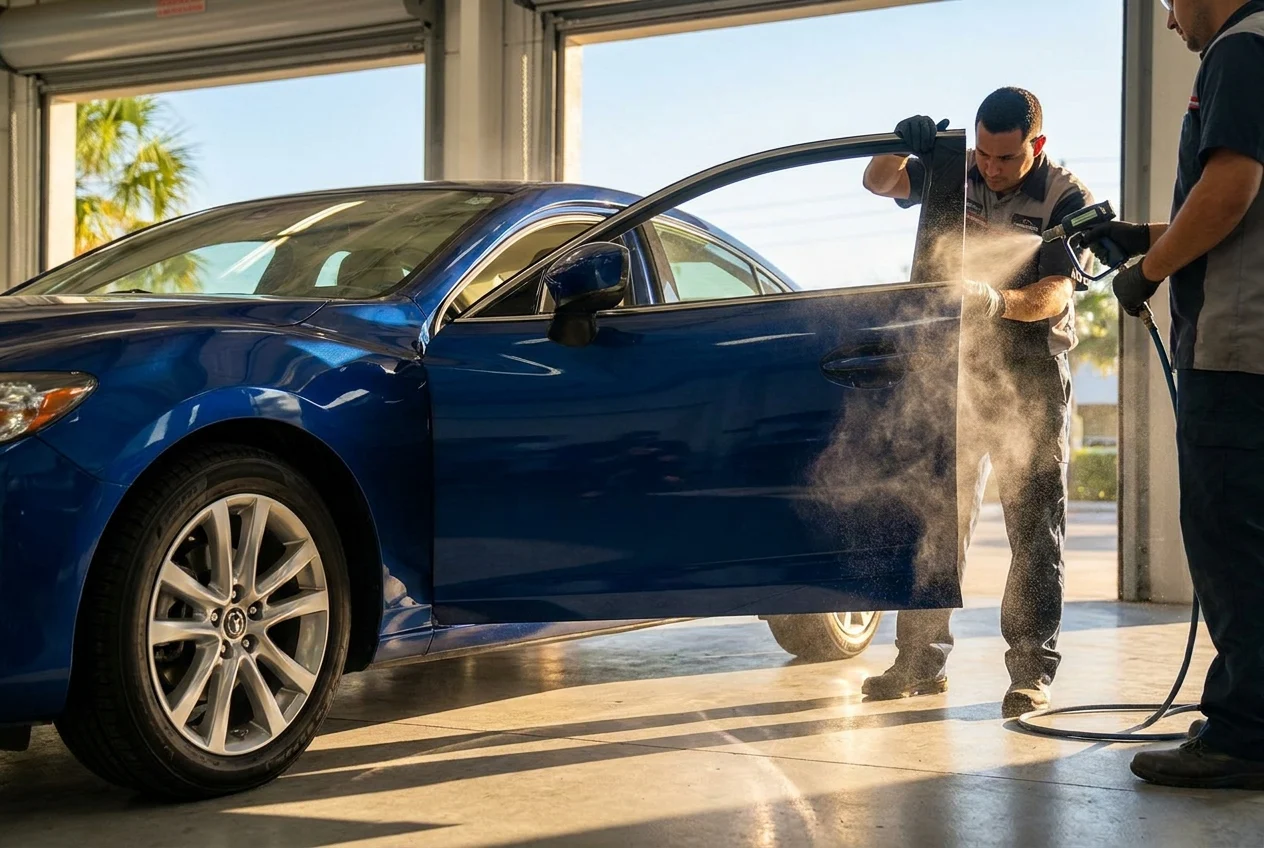
Minor panel damage may be corrected through reshaping, sanding, filling, priming, and refinishing. More severe damage may require sectioning or full panel replacement. The goal is to restore the panel contour, body lines, mounting points, corrosion protection, and finish quality without compromising surrounding structure.
Why Panel Gaps and Body Lines Matter
Even spacing between panels is a sign that the underlying parts are aligned correctly. After an accident, technicians check gaps around doors, hoods, fenders, liftgates, bumpers, and lights. Uneven gaps may indicate that a panel is bent, a mounting bracket is distorted, or the underlying structure has shifted.
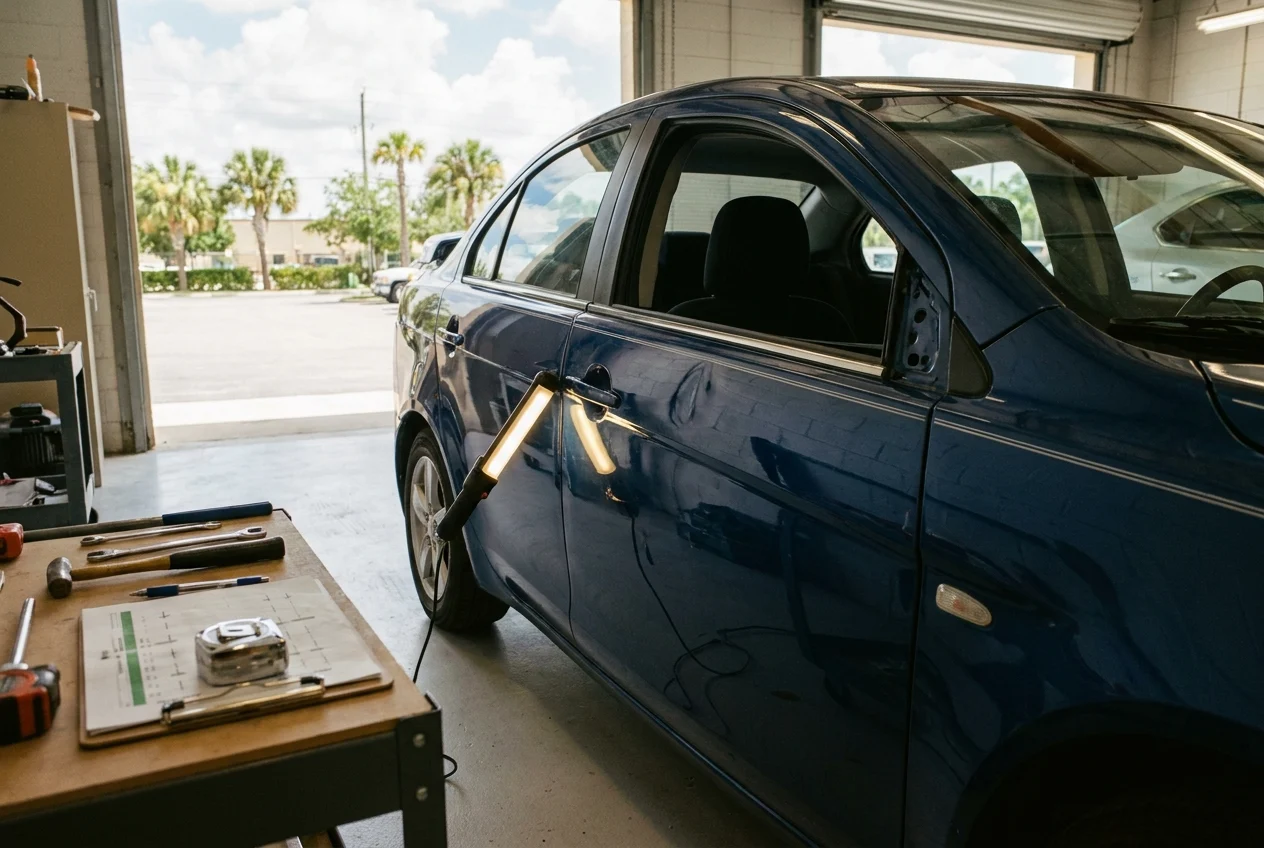
Body lines are equally important because they reveal whether the repaired area matches the original shape of the vehicle. A poor repair may look wavy in certain lighting, show mismatched contours, or create reflections that do not flow smoothly from one panel to the next. Skilled technicians use specialized lighting, sanding blocks, measuring tools, and experience to restore these details accurately.
Handling Plastic, Steel, Aluminum, and Composite Panels
Different vehicle materials require different repair techniques. Steel panels may be straightened, welded, or replaced according to the level of damage and manufacturer instructions. Aluminum requires dedicated tools and contamination control because it reacts differently than steel and can be weakened by improper heat application.
Plastic bumper covers and trim pieces may be repairable if cracks, tears, or mounting tabs are within acceptable limits. Composite panels may require specific bonding agents, curing procedures, or replacement when damage compromises strength. Expert repair facilities identify the material first, then choose methods that preserve durability and appearance.
Structural Repair After a Collision
Structural repair addresses the parts of a vehicle that support its shape, crash performance, suspension mounting points, and occupant protection systems. These components may include frame rails, aprons, pillars, rocker panels, floor sections, radiator supports, rear body panels, and roof structures. Damage to these areas must be handled with precision because they affect how the vehicle performs in normal driving and in a future impact.
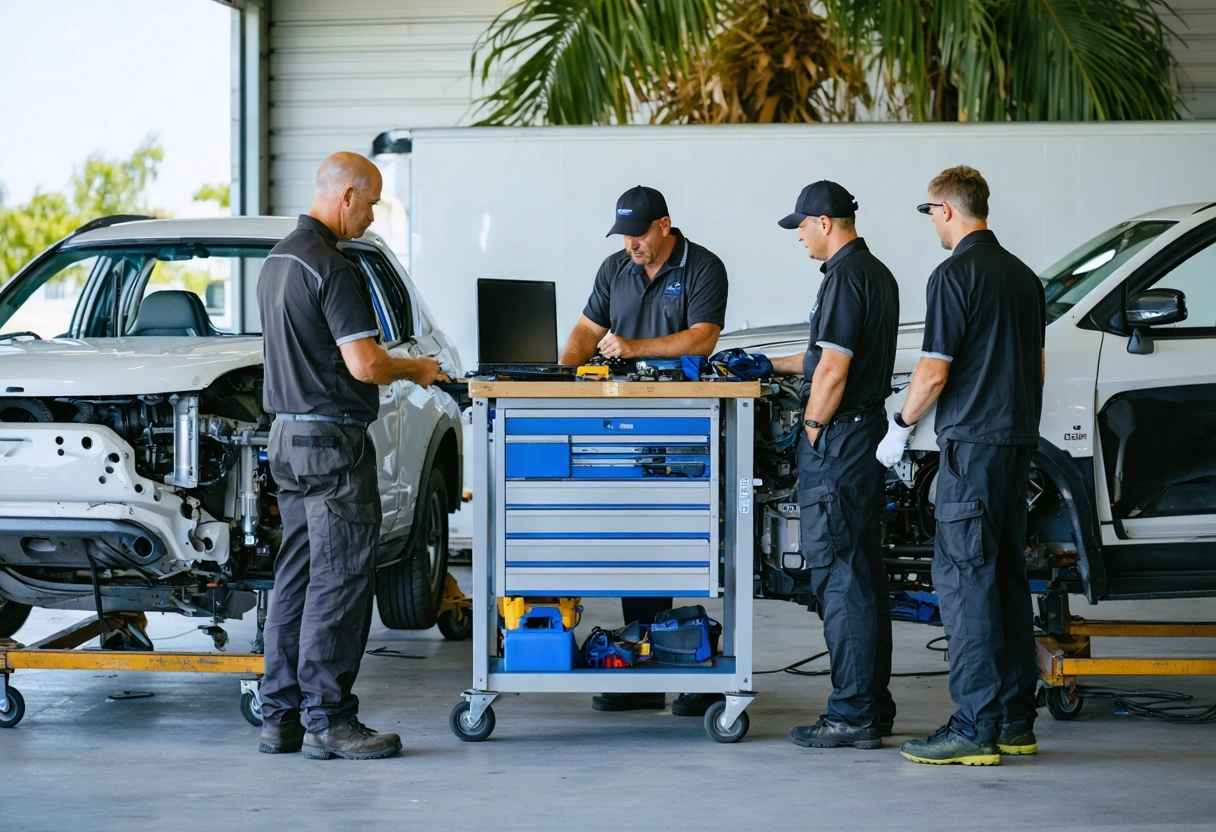
Not every accident results in structural damage, but it must be ruled out carefully. A front corner impact, side collision, rear-end crash, or curb strike can all transmit force into areas that are not immediately visible. Expert technicians use measuring equipment and factory data to determine whether the structure remains within specification.
Computerized Measuring and Frame Equipment
Computerized measuring systems compare specific vehicle points to manufacturer dimensions. These measurements help identify whether rails, pillars, suspension points, or other structural areas have moved. The data also guides technicians during the repair process so corrections can be verified instead of estimated by sight alone.
When structural correction is needed, the vehicle may be secured to frame equipment that allows controlled pulling and anchoring. Technicians apply force in planned directions to restore the structure to specification. This process requires training because too much force, poor anchoring, or incorrect pull angles can create additional damage or weaken the vehicle.
Sectioning, Welding, Bonding, and Corrosion Protection
Some structural components can be repaired, while others must be replaced or sectioned at manufacturer-approved locations. Sectioning involves removing a damaged portion of a component and installing a replacement section using specified procedures.
After welding, bonding, or panel replacement, corrosion protection is critical. Technicians apply primers, seam sealers, cavity wax, coatings, and underbody materials where required. These steps help protect repaired areas from rust, moisture intrusion, and premature deterioration, especially in hidden seams and enclosed cavities.
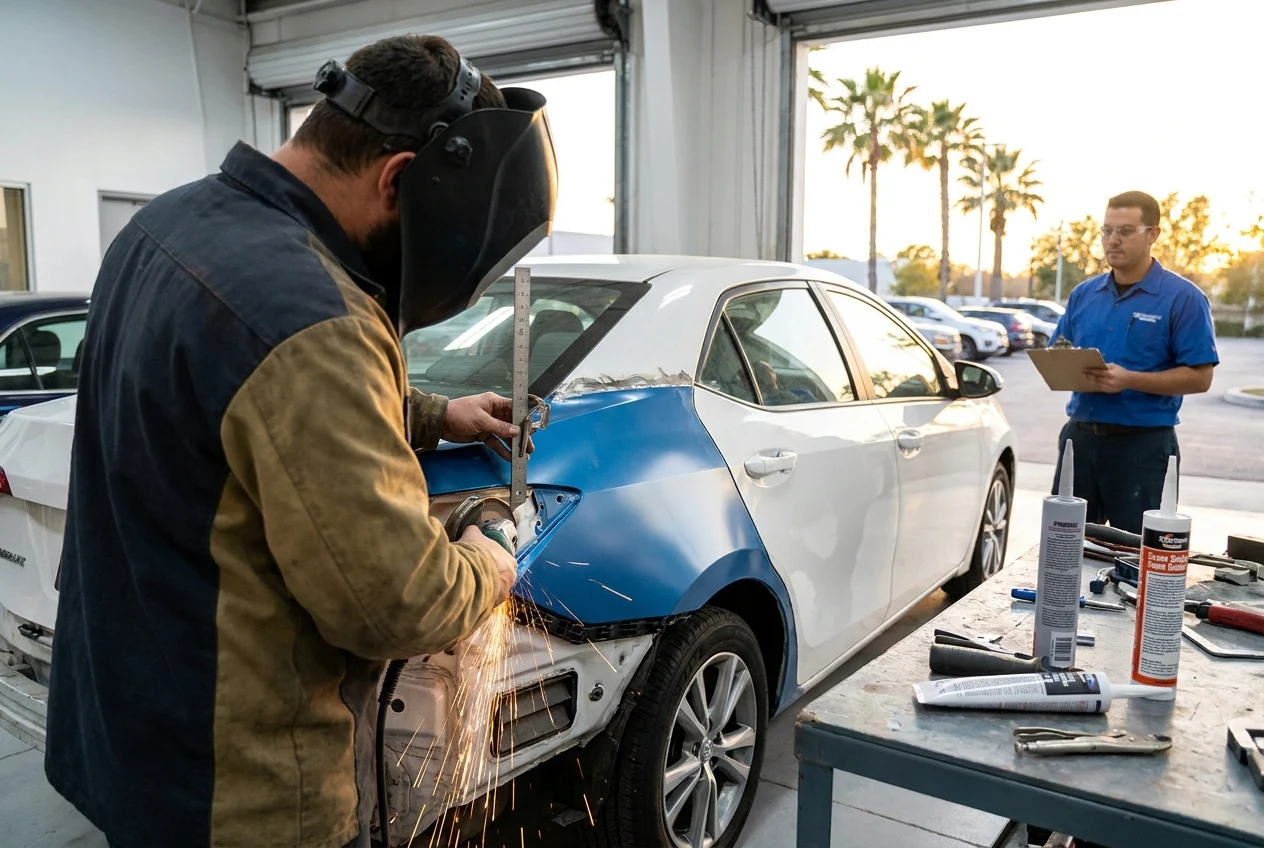
Paint Matching and Refinishing Quality
Once metal, plastic, or structural repairs are complete, refinishing restores the vehicle’s appearance and protects repaired surfaces. Paint work involves more than applying color to a damaged area.
Modern automotive colors can be complex, especially metallic, pearl, tri-coat, matte, and tinted clear finishes. A color code provides a starting point, but age, sun exposure, factory variation, and previous repairs can affect the final match.
Why Blending Adjacent Panels May Be Necessary
In many cases, painting only the damaged panel can make even a correct color appear slightly different from nearby panels. Blending allows the new color to transition into adjacent areas so the eye does not detect a hard edge or mismatch.
For example, a repaired front door may require blending into the rear door or fender so the finish looks consistent in sunlight, shade, and nighttime lighting.
Texture, Gloss, and Finish Inspection
A quality refinish should match not only the color, but also the texture and gloss of the surrounding panels. Factory paint often has a specific level of orange peel, reflection clarity, and surface feel.
Need help with What to Expect from Expert Door, Panel, and Structural Repair After an Accident?